Tag Archives: DRAKE Charlotte Augusta Dring /

2024 Glengallan Deuchar Dinner

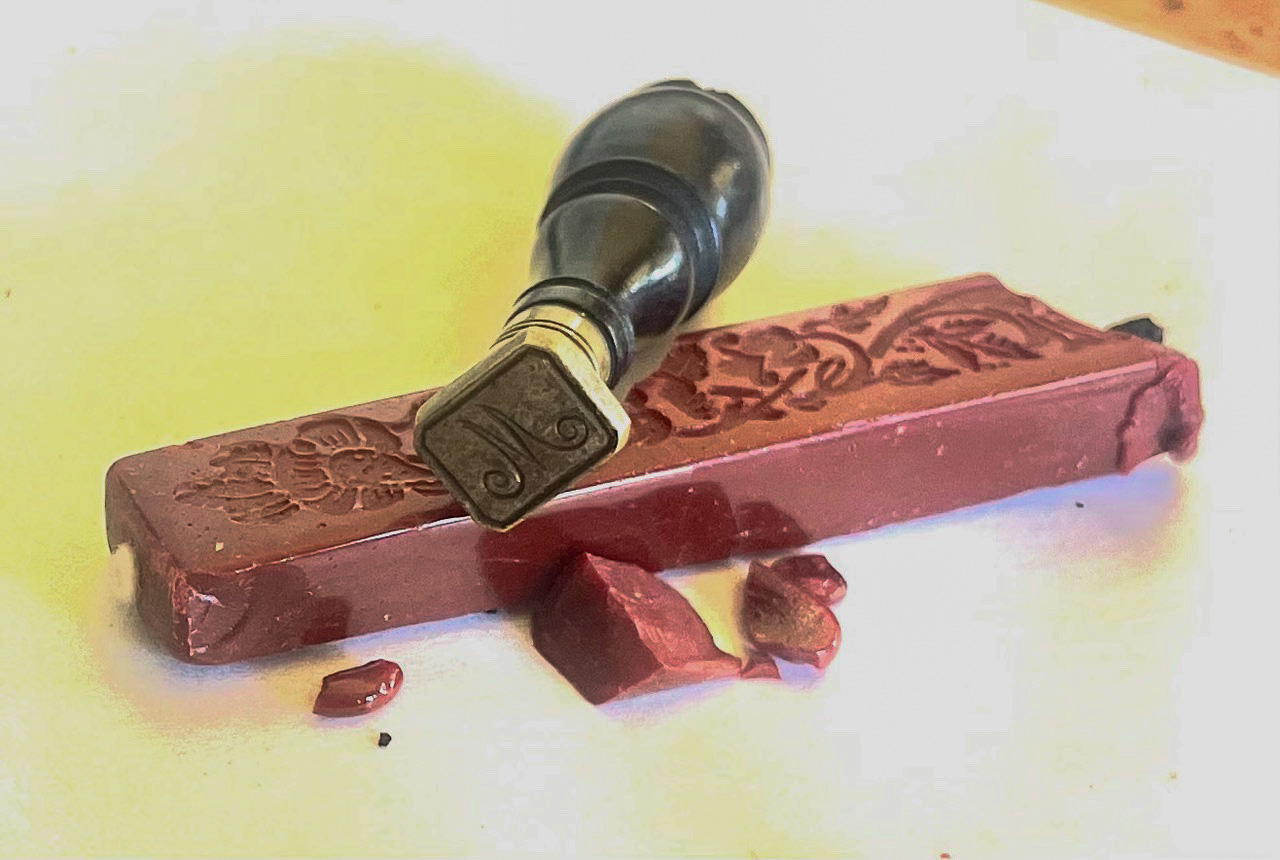
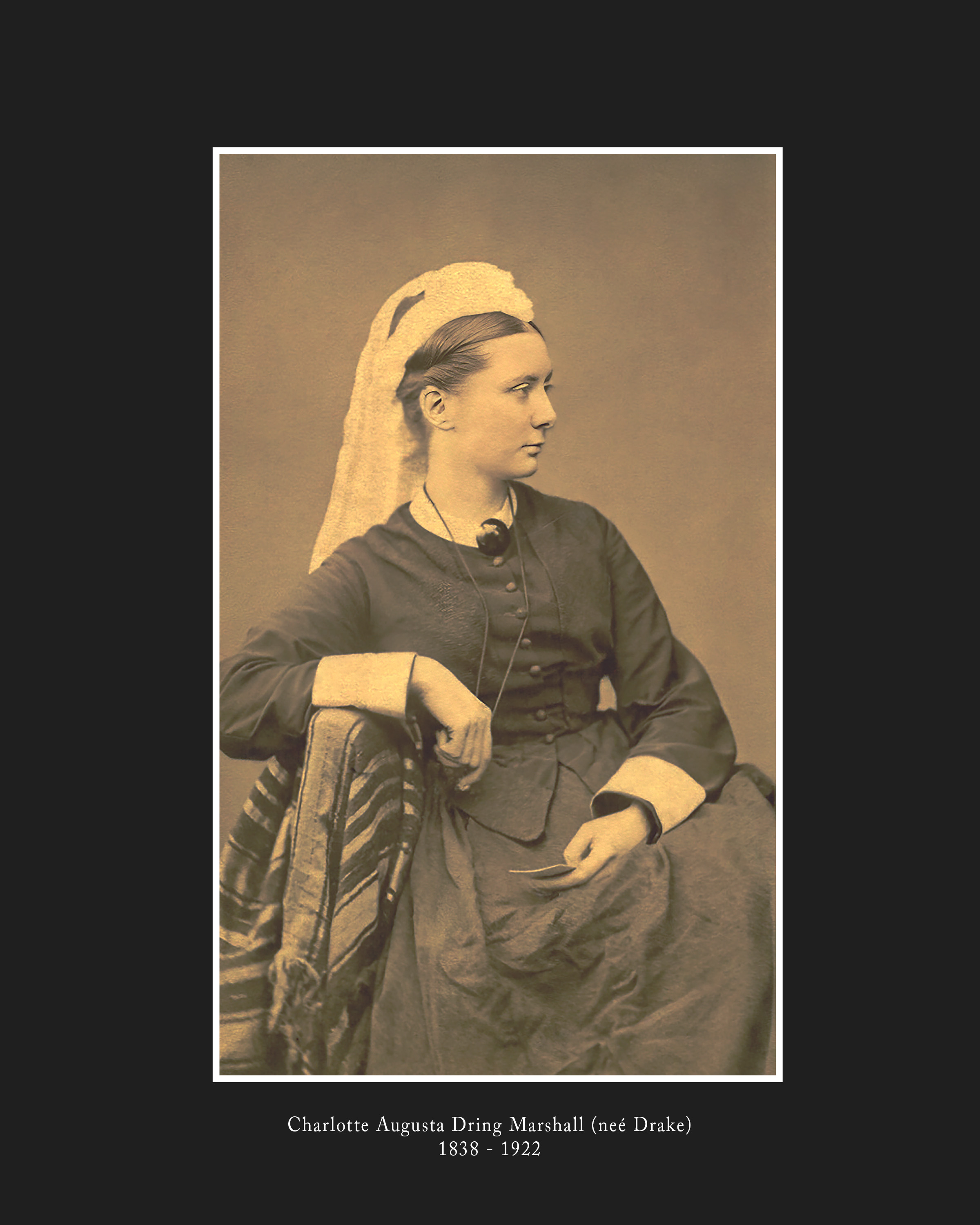
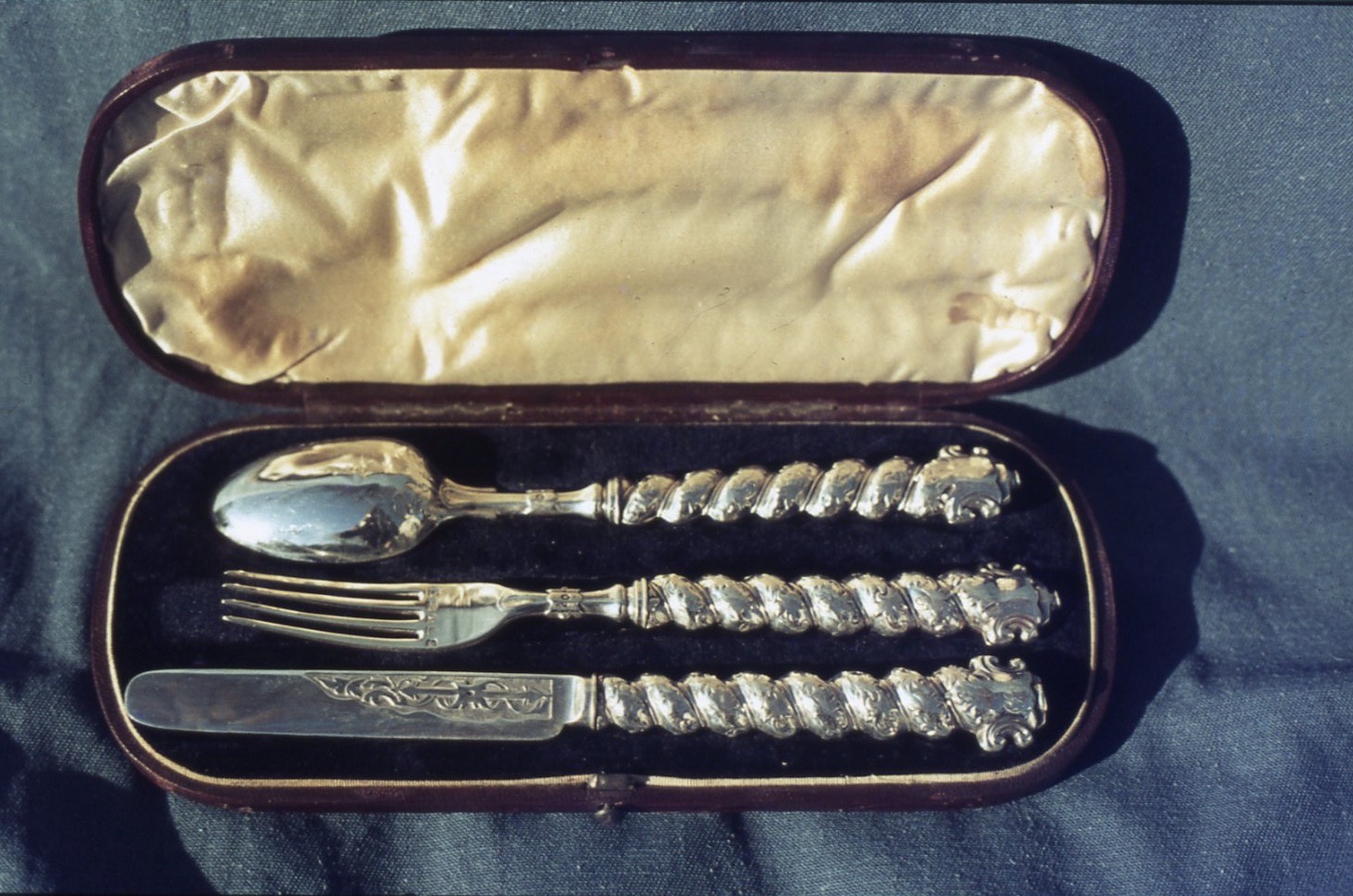
Guests at the dinner; Jane modelling the veil with Megan and Alun looking on (©Christine van Zyl); Veil, Christening Set and Seal; Megan and Alun displaying the veil.

Megan and Alun attended the annual Deuchar Dinner at the Glengallan Homestead on Saturday 14 September 2024. The homestead was built by John Deuchar and the dinner commemorates the lavish dinner he held there on 16 September 1868 to celebrate its construction. The Warwick Examiner reported:

BALL AT GLENGALLAN. — On Wednesday evening last, John Deuchar, Esq., entertained a large party on the occasion of opening his new house, which is generally acknowledged to be the finest and best finished residence in the colony. A great number of his friends, including the “elite” of the surrounding districts and Brisbane, were invited. Dancing commenced at nine o’clock, and was kept up with great spirit until twelve o’clock, when the party adjourned to supper laid in the spacious balcony, which was rendered perfectly warm and comfortable by being enclosed with Venitian blinds. The supper table, which was 100 feet in length, presented a most imposing appearance, and everything connected with it was managed in the well known hospitable manner of the worthy host and hostess. … Dancing was then resumed, and kept up without cessation until six o’clock, when the numerous guests took their departure, having spent an exceedingly pleasant evening.

Glengallan homestead ready for the party.
©Glengallan 2024

The homestead was similarly prepared this time, but with heavyweight plastic blinds and gas heaters to manage the chill Darling Downs air. The modern contingent also didn’t have the stamina of the settlers of old. Matters were concluded before midnight, but we too spent “an exceedingly pleasant evening” with everything connected with it being well and hospitably managed by the dedicated volunteers and staff of the Glengallan Homestead Trust.

Apart from having a very nice dinner, the purpose of our visit was for Megan to donate some Marshall family photographs and heirlooms to the Trust to enhance their collection. The artefacts will also allow more to be told about the Marshalls, who owned the property for the longest, but were not directly involved in the running of the station after Charles Marshall’s death in 1874. Rather than just handing over the items with a handshake we prepared a narrative to explain their provenance and significance.


Megan is the great-great-granddaughter of the Marshalls of Glengallan and inherited a number of items which she would now like to re-unite with the Glengallan story. We would like to provide a short narrative to give context to these items so I am going to provide a quick background to the items and Megan is going to show them off and hand them over to Donna Fraser.

Charles Henry Marshall

The story of the Marshalls at Glengallan starts with Charles Henry Marshall.

He came to Australia in 1843 as the bookkeeper for the Van Diemen’s Land Company at Stanley on the north coast of Tasmania. He went on to become the Superintendent of their Woolnorth sheep station (the NW tip of Tasmania) and made quite a bit of money with his side hustle of growing potatoes.

He left in 1849 and by 1850 was on Glengallan in partnership with Robert Campbell tertius. In 1852 he became the sole lessee. In 1854 he went into partnership with John Deuchar – who would later build this house.

To add to the collection we have a framed photograph of Charles Marshall and the Marshall letter seal.

©Alun Stevens 2024 ©Glengallan 2024

Quite small with an M in the same style as is seen on the Marshall silver which is on display in the visitor centre.

Charlotte Augusta Dring (Drake) Marshall

Charles returned to England in 1857.

On 6 April, he had dinner with William and Mary Marshall, at 19 Regents Park Terrace – an elegant, four storey, terraced house in a very nice part of London. Both William and Mary were his cousins. William on his father’s side, Mary on his mother’s. Also at the dinner were the Drakes from No. 21.

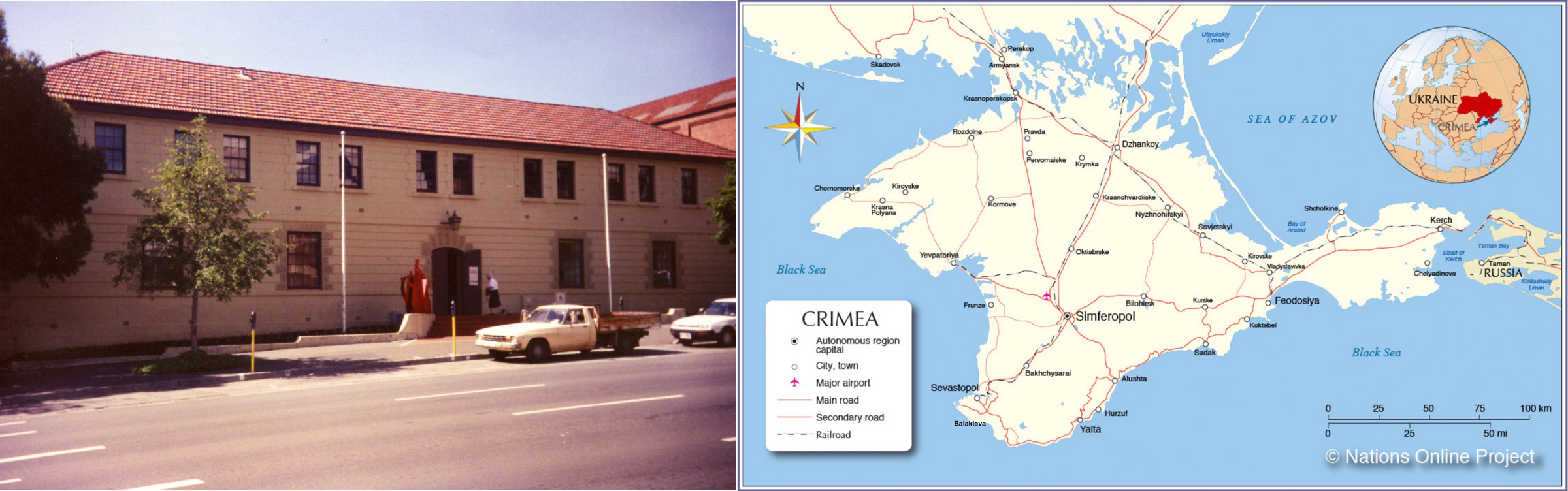
William Henry Drake and his wife Louisa Purkis had met and married in Perth as two of the earliest settlers in WA. Their second daughter, Charlotte Augusta Dring, was born at Albany. William Henry was a Commissary and went on to be the Colonial Treasurer of WA. After Perth, he was posted to Tasmania, Canada and to Balaklava in Crimea during the War. After the War, the family settled back together at No. 21 Regents Park Terrace.

William Henry kept a detailed Journal which is how we know Charles had dinner with them. It also shows that the Drakes then saw rather a lot of Charles. He was clearly an avid suitor.

11 April: He had dinner with them.
13 April: He called on them.
18 April: He went to see an exhibition with the Drakes.
27 April: He went to see an exhibition of Crimean relics with the Drakes.
8 May: He dined with the Drakes.
12 May: He had tea at the Drakes.
 
There is then a little gap in recorded sightings of Charles but he must have been around given developments.
 
29 July: Charles again dined with the Drakes.
4 August: John Deuchar had also been doing things other than farming, but closer to home. He married Eliza Lee in Sydney. But Charles wasn’t far behind.
8 August: Charles went with Charlotte and her mother to an Art Union exhibition.
15 August: Charles went with Charlotte and her parents to the Tower of London and dinner.
18 August: Charlotte’s sister, Louisa, writes to her to congratulate her and wish her every happiness. What had happened?
26 August to 5 September: Charlotte, her parents and Charles went to Devon to visit various members of Charles’s family.
6 September: Charles, Charlotte and William Henry went to see Charles’s brother William in Clapham, London.
11 September: Wedding invitations were sent out.
23 September: Charles and Charlotte married at St. Pancras. This was also the wedding anniversary of Charlotte’s parents and of the Marshalls of No. 19.

Which brings us to the second item to come back to Glengallan.

Queen Victoria at her wedding in 1840 had set the trend for white wedding dresses and veils. Her choice of a lace veil from Honiton in Devon made them the most desirable of accoutrements and Charlotte thought so too.

We don’t know whether she bought it while they were travelling in Devon or at an outlet in London, but this is her Honiton lace veil which Megan is now donating to Glengallan for their collection. (See banner above.)

We also have two photos of Charlotte Augusta.
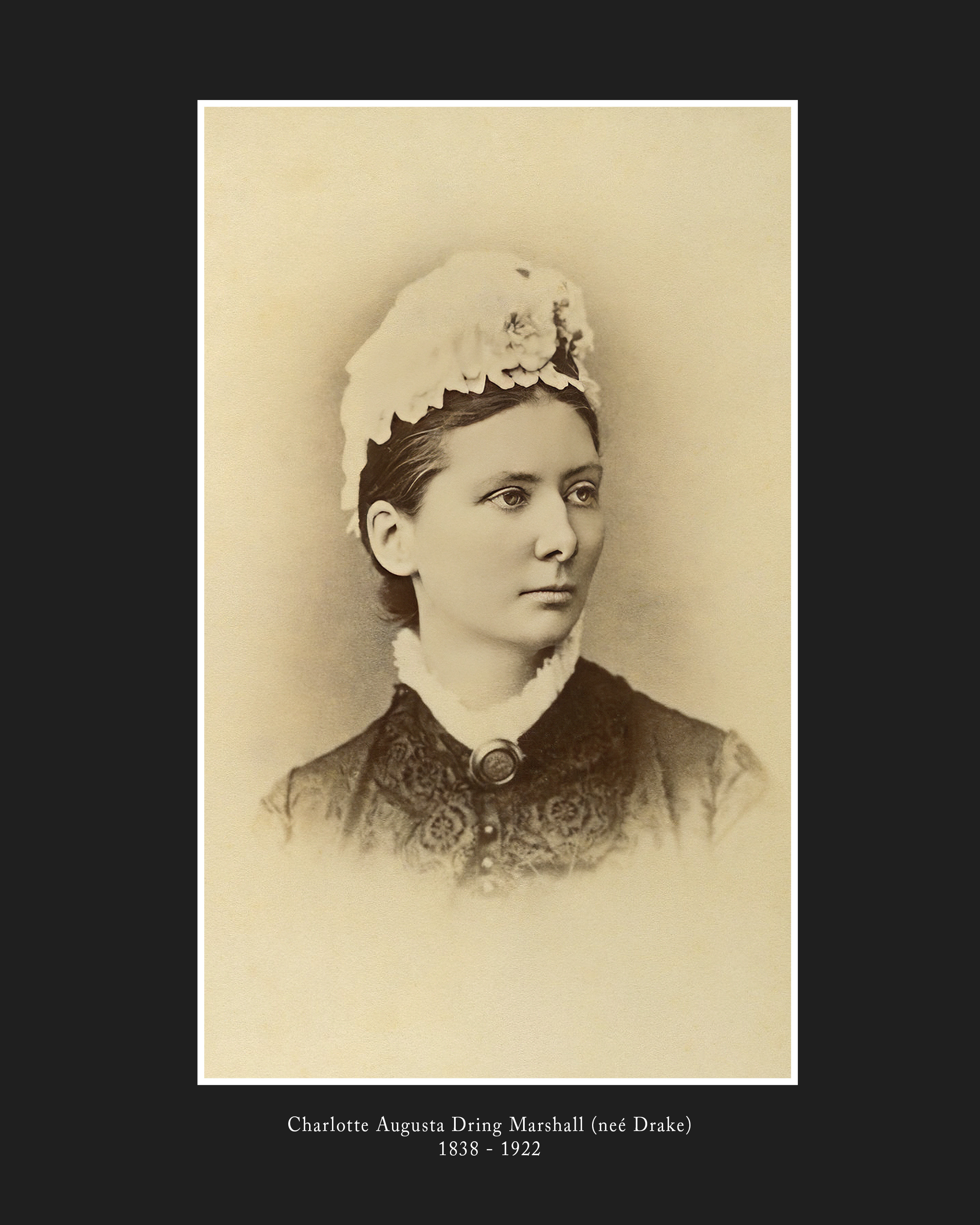
©Alun Stevens 2024 ©Alun Stevens 2024

Charlotte Louisa Marshall

After their marriage Charles and Charlotte honeymooned in Scotland and departed for Australia on 12 December 1857. They arrived at Sydney on 17 February 1858, at Brisbane on 4 March and at Glengallan a few days later.

So Charles had been away for over a year.

Life settled down and their first child, a daughter, Charlotte Louisa, was born in the old wooden house on 23 February 1859.

She was the first of the Glengallan Children. Mary Deuchar had been born on 4 June 1858, but this had been at her grandmother’s house in Double Bay, Sydney.

Charlotte Louisa was not only born on Glengallan, she was also baptised on Glengallan, on 17 April 1859, by Rev William Woodman Dove. Rev Benjamin Glennie’s diary shows that there were 15 people in attendance.

And she was presented with this silver Christening set which is also being donated to Glengallan.

It is Sterling Silver engraved CLM and hallmarked for Sheffield 1855.

There is also a photo of Charlotte Louisa (called Louie) as a girl.
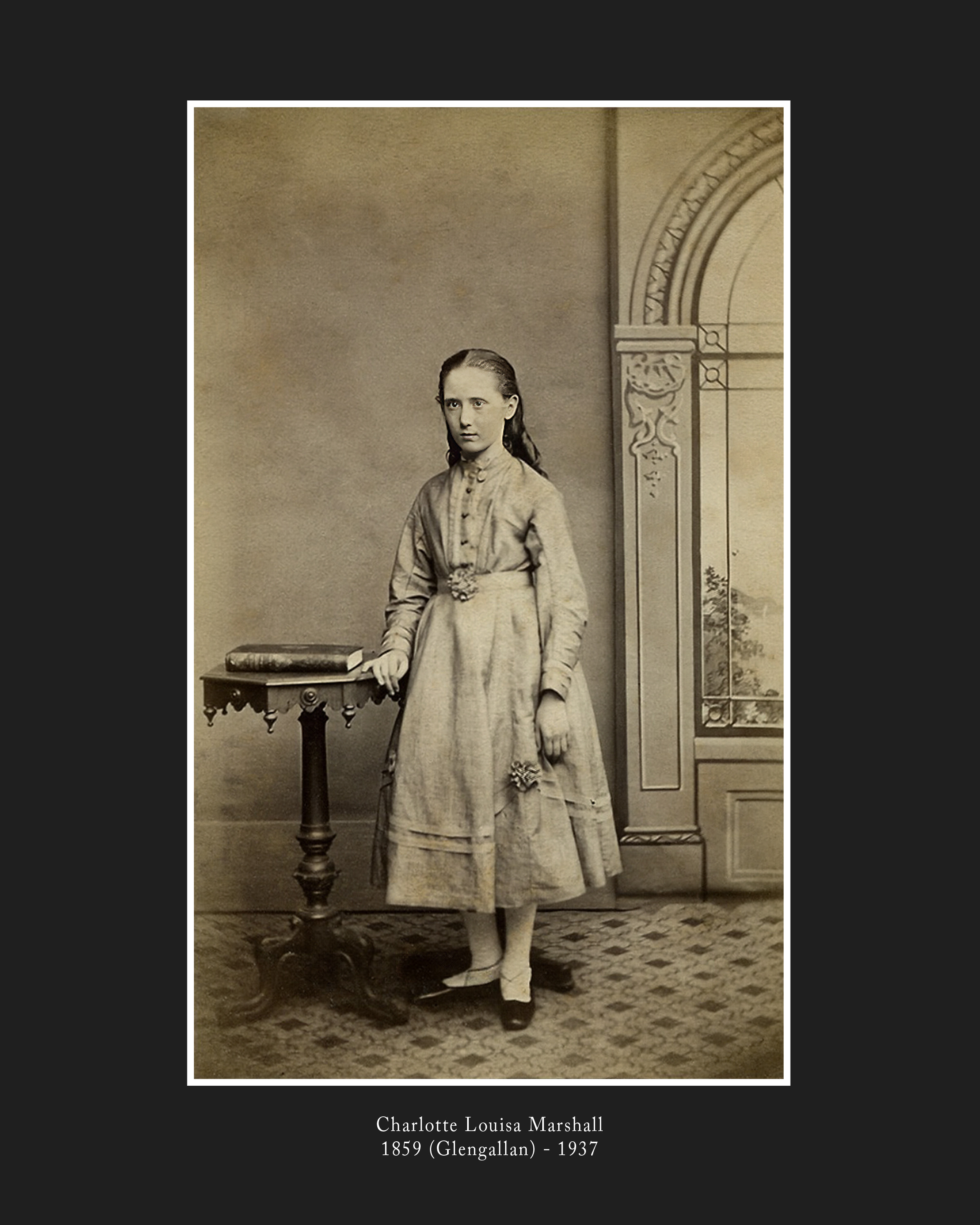
©Alun Stevens 2024 ©Alun Stevens 2024

Those are all the items, but, if you will indulge me for a few more minutes, there is one more story to tie them all together. We need to jump forward 25 years. John Deuchar and Charles Marshall have died. Charlotte Augusta’s mother has also died in Grahamstown, South Africa and her father has married a local young lady three years younger than Charlotte Augusta. Charlotte is now the partner in Marshall and Slade dealing with William Ball Slade.

On 2 November 1883 Charlotte Augusta wrote to William Ball Slade:

Did I tell you that Louie is engaged to be married, (she has been engaged for some months but it is not given out yet) to Horace Ayliff, he is a nephew of my Step Mother Lady Drake, & is going to be a Barrister, but is not called yet – His Father is the leading Solicitor in Graham’s Town so will be able to put work into Horace’s hands – I shall not like Louie’s leaving to go to South Africa to live, but of course if it is for her happiness I shall have to let her go – & she thinks the hot Climate will suit her better than the cold & damp of England – However I do not see much chance of their being married at present as he must make a position first.

On 13 June 1884, she wrote:

Do not be surprised if you have a visit before very long from my eldest daughter, she is most anxious to accept an invitation she has had from the Arnolds in Sydney, & had just planned to accompany Dr. & Mrs. Taylor, but not it is decided that Mrs. Taylor does not go out yet so Louie is looking for another Chaperone – If she does go, she wishes much to have a peep at Glengallan, where she was born.

On 27 February 1885 she wrote again:

I am getting Louie’s things ready as I believe she will go to the Cape to be married this Spring.

She had wanted to see Glengallan again, but didn’t make it. She was married in Cape Town on 23 May 1885 and the wedding veil you have just seen was one of the “things” that her mother got ready for her. So we can be confident that the girl from Glengallan also wore it at her wedding.

Thank you all and especially Jane Brenner for modelling the veil.


©Alun Stevens 2024
Reminiscences

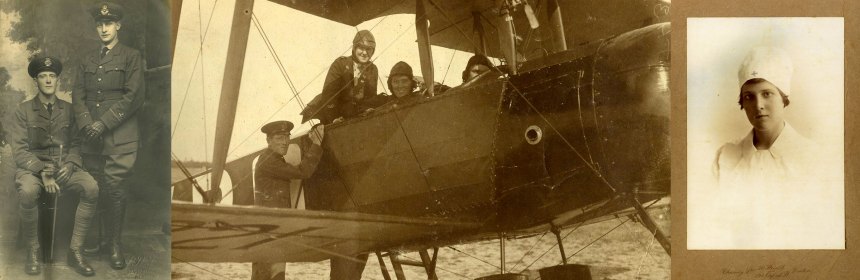
Harold “Carrots” Ayliff with his friend Frikkie Brink; Harold with his sister Margaret “Meg” in the cockpit and her friend “Beery” de Beer; Charlotte “Charlie” Ayliff

My great uncle, Harold “Carrots” Ayliff, wrote a short, and incomplete note with his reminiscences of his time in the Royal Air Force at the very end of World War I, and also his involvement in World War II. I was given a copy by his great-granddaughter, Georgia. Some time later, when visiting my cousin, Janet, in New Zealand, she showed me the photograph album that her grandmother, Charlotte “Charlie” Ayliff, Harold’s sister, had kept of this same period during World War I. I was struck by the overlap between the written record and the photographic record. The photographs brought life to the story and the writings put the photographs in context.

I was particularly struck by the photograph, in the banner above, of my grandmother in the cockpit of one of Harold’s training planes. She was obviously thrilled.

I was reminded of the reminiscences and photographs recently when I read this article on powered flight at Hermanus. Harold’s story is not that different from that of Henry Luyt of Hermanus.

I had already created an album combining Harold’s story with Charlotte’s photographs and felt that it would be good to publish it on our web site for everyone to see. Here it is with links to many of the places and events that Harold mentions. Please click HERE.


©Megan Stevens 2021

Portraits of a Merchant Family

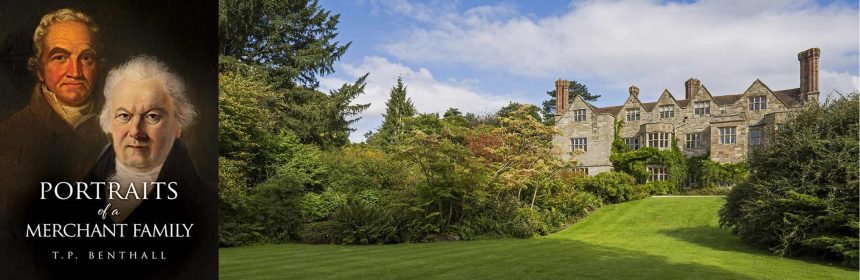
The book; Benthall Hall, Shropshire.


While researching our paper, The Wrong Marshall, Megan met Tim Benthall on an online forum. This was fortunate as Tim has provided us with a lot of invaluable information and a number of family documents that we could not have obtained otherwise. Our favourite is what we call “The Analogue Photograph“. This was a document signed by all the descendants of Dorothy Marshall (neé Chadder), the wife of Dr. William Marshall, who were present at her 80th birthday function on 29 August 1822, before the invention of cameras. We both enjoyed working with him.

Tim was working on a book about his Benthall ancestors that is now complete and has been published. PORTRAITS of a MERCHANT FAMILY is an elegant and impressive book in coffee table format available on Amazon:

Benthall Hall is a National Trust property in Shropshire. It contains about 70 portraits that depict eight generations of a single family, together with their many relatives. The two portraits on the front cover are of William Bentall and Dr. William Marshall. They met in Devon and became friends in around 1760, one a young merchant and the other a medical student. They remained friends for life, and became the patriarchs of that large extended family. Their children and grandchildren intermarried, and in the 19th century this clan exemplified the importance of “incest and influence” in maintaining a successful merchant class (as engagingly described by the anthropologist Adam Kuper in his book of that title). Its most successful members sometimes brushed with greatness, becoming entrepreneurs or civil servants in the British government and its colonies. Several others lived colourful but less respectable lives. The author draws on public and private documents to bring this family to life and show how, for better or worse, they lived through the political and social developments of the 19th and 20th centuries.

Any net profits from sales of the book will be donated to the National Trust.

The Author Notes state:

T. P. Benthall was born in Calcutta (now Kolkata) in West Bengal and educated in England. After graduating from Cambridge University with a degree in Mathematics, he spent over fifty years working with computers, as an operations research analyst, management consultant and executive at a computer software company, before being coaxed into becoming a genealogist and amateur social historian.

Whilst the book is primarily about the Benthall family, it is also a wonderful source of pithy information about the Marshall, the Adams, the Drake and the other families who joined together to further their own joint interests. It is meticulously researched and presented and definitely a must read for anyone with an interest in these families.

The book is previewed here on the Amazon US site. If you wish to buy it, you will need to find it on your local Amazon site.


©Alun Stevens 2020

The Wrong Marshall

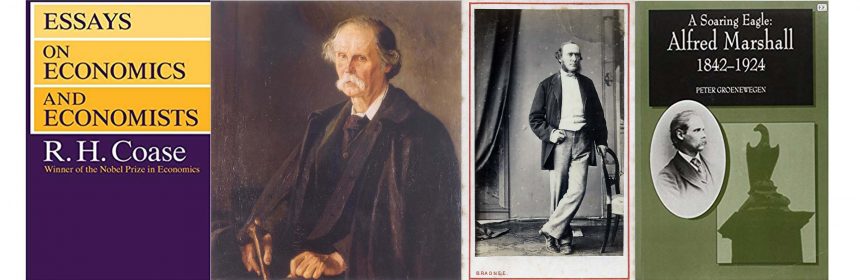
Alfred Marshall and his favourite uncle, Charles Henry Marshall.


Megan has been researching her Marshall ancestors for many years. As part of this research, she came upon Essays on Economics and Economists by Professor Ronald Coase. Ronald Coase was a Nobel Prize winning economist who had written two essays on the family background of the well-known Cambridge economist, Professor Alfred Marshall. These essays contained a lot of information about other members of the Marshall family as well, including Megan’s great-great-grandfather, Charles Henry Marshall and his parents and siblings.

Coase’s research did not present the family in a flattering light, but it filled in a number of holes in the story that Megan had managed to uncover by that time. Megan knew that Charles had been a successful squatter on the Darling Downs of Queensland, but had no idea of how or why he had moved to Queensland or of how he had acquired the capital that allowed him to buy Glengallan station.

Coase offered an explanation. He described a meeting on the Turon goldfields in 1851 between Charles and Nehemiah Bartley who had published a book about his travels around Australia. Coase described how Charles had misrepresented his family background to Bartley by claiming to be the son of the Chief Cashier of the Bank of England, whereas his connection to the Bank of England was via his brother, who was a mere clerk at the Bank. From this episode, Coase then built a narrative of a deceitful and self-aggrandising family that permeated all aspects of his essays.

Whilst this was disappointing, the incident still needed to be explored. Was this where Charles had made his money? What was Charles doing there? Why had he gone? When had he gone? This exploration began almost exactly three years ago when Megan started looking through the old newspapers and family records. This is when the Coase narrative began to unravel.

A letter written by Charles to his aunt made it clear that as a grazier on the Darling Downs, he was struggling to cope with the loss of labour to the diggings rather than having gone to the diggings himself. The newspapers had no record of a Charles or even a C. Marshall on the goldfields, but did have a record of an F. Marshall. Newspaper articles and the Bank of England records showed that the Chief Cashier at that time was indeed a Marshall. A Matthew Marshall. No relative. So there was a real possibility that Nehemiah Bartley had met someone other than Charles.

After a lot more digging, Megan then found the clincher. Death notices in Sydney and London showed that a Francis Marshall had died in Sydney and that he was the son of Matthew Marshall of the Bank of England. Further investigation put this beyond any doubt. Shipping records showed that Charles was travelling between Brisbane and Sydney at the time that Bartley had met “Marshall” at Turon. Bartley had met Francis Marshall. Coase had found The Wrong Marshall. Charles had not lied about his position.

We then decided to look into all of Coase’s other claims. This was a lot of work and involved visiting archives and libraries in Melbourne, Hobart, Sydney, Brisbane, and Cambridge, UK, and having documents copied at The National Archives in London. It also involved examining a multitude of family sources and this is where we fortuitously made contact with Tim Benthall whose family is extensively connected to the Marshalls. He provided us with access to a number of very valuable Benthall family documents without which our research would have struggled in some key areas. The National Library of Australia’s TROVE service was also invaluable and this research would not have been possible without it. Coase’s narrative unravelled even more. I won’t describe all the details, they are in the paper, but I will say that this research proved that much of what Coase had written about the Marshalls was wrong.

The public record was also wrong. Coase’s work had been used by a number of other authors, so his erroneous descriptions of the family had spread far and wide. The definitive biography of Alfred Marshall, A Soaring Eagle: Alfred Marshall 1842-1924, by Professor Peter Groenewegen repeated Coase’s errors. The Oxford Dictionary of National Biography had even been amended to reflect Coase’s and Groenewegen’s view. What to do about this? We decided that because of the standing of Coase and Groenewegen, we would need to have a meticulously researched and presented rebuttal published in a peer reviewed journal.

This was our next great journey. Compiling all the information we had uncovered into a cogent and engaging narrative which dealt with the list of misconceptions was a challenge. Many, many drafts ensued. A long and complicated ramble was progressively reorganised into a coherent structure. The words pared back to essentials. We then circulated the draft to a number of very helpful reviewers with experience of publishing professional papers. More refining and structuring ensued. And some more. We were encouraged to submit the paper to History of Political Economy as the pre-eminent journal in this field. This we did. With trepidation.

Surprise and relief. They liked the paper, but wanted an extensive rewrite. It had to be significantly shortened, but at the same time its scope expanded to include a critique of Peter Groenewegen’s book. The editor commented that he had not previously seen a paper with as many references as ours. So, many more weeks trimming and paring and rephrasing. But we did it. The rewrite was accepted in late 2018. Whew! Then the wait.

At last. In December 2019, we began to engage in the typesetting and proof editing. And now we have the final product. Our paper, The Wrong Marshall: Notes on the Marshall family in response to biographies of the economist, Alfred Marshall was published by History of Political Economy in its April 2020 issue, just out. We have also prepared an extended version for family historians with photographs, maps and copies of family and archival reference documents many of which would not otherwise be available to readers. It also includes further research that was not ready for the published paper.

The published paper and our extended article can be found HERE

Please enjoy and let us know what you think.


©Alun Stevens 2020

Whatever happened to ‘Alma’ and ‘Inkermann’?

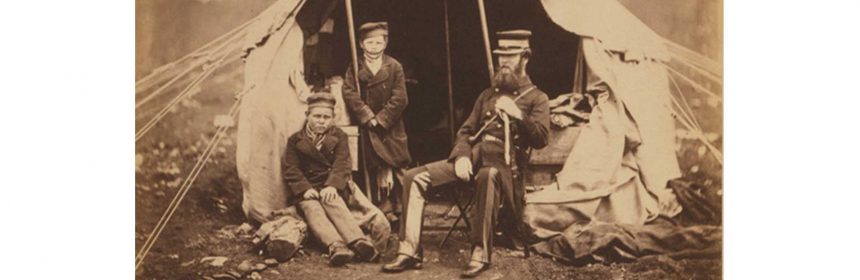
Megan came upon a blog post by Philip Boys regarding an intriguing side-story to the Crimean War. The image is a photograph by Roger Fenton taken during the siege of Sevastopol in 1855 of two Russian boys with Colonel Brownrigg. The boys were nicknamed ‘Alma’ and ‘Inkermann’.

The one standing holding the tent pole, ‘Inkermann’, real name Simeon Paskiewitch, was taken back to England where he adopted the surname Sinca. After this photograph was published in 1901, Simeon’s son came forward and this resulted in Simeon being interviewed:

“I remember quite well that photo being taken; it was before Sebastopol, forty-six years ago.”

“After the battle of Alma, when the English, French and Turkish soldiers got into Balaclava, the Russian farmers became frightened, and ran inside the walls of Sebastopol, leaving the grape crops behind them. We boys got out and began picking the grapes, but one day we saw some English soldiers in front of us. We all ran away, and I and the other little one in the picture got under a big tub. Here we had to stay in fright all night and part of the next day. In the afternoon one of the soldiers came across our poor old tub and knocked it over, and there was a surprise for him to see us two frightened little nippers.”

Mr Sinca (or Paskiewitch) went on to tell how they were let go, and were chased and ill-treated by Turks, and finally got into English hands again, and were taken care of by Colonel (then Captain) Brownrigg.

Mr Sinca says he was brought to England and educated at St Mark’s School, Windsor, eventually entering the service of the Earl of Pembroke, where he has been for thirty years.

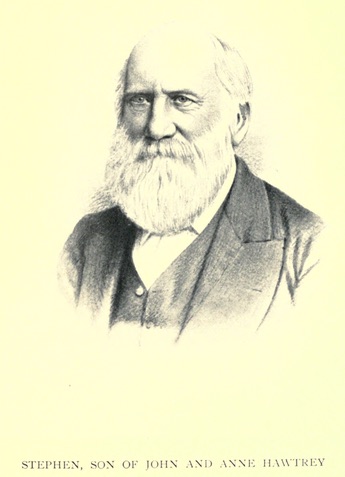
It is this reference to St Mark’s School (“the Working Class Eton“) that provides the interesting link for us because St Mark’s was founded by Rev. Stephen Hawtrey M.A. who was Vicar at Holy Trinity Church, Windsor, and eventually Head of Mathematics at Eton College. He also took Simeon, and other boys, on trips to HMS Pembroke and the Suffolk seaside.

Stephen Hawtrey was also the person who Charles Henry Marshall and Charlotte Augusta Dring Drake chose to marry them in 1857. The Hawtrey and Marshall families were linked over many generations and Charles and Stephen were second cousins. Charles and Charlotte named their second son Hawtrey.

I have also found another point of connection. Simeon Sinca was a seaman in his early years. He was an apprentice aboard The Florence Nightingale from 1863 – 1868 and his first voyage was to Melbourne. The interesting link is that Charles Henry Marshall in a letter dated 4 March 1874 indicated that he was shipping new wool bales to his partner at Glengallan “per ‘Florence Nightingale’ for Brisbane”.

The fascinating story of ‘Alma’ and ‘Inkermann’ can be found HERE

Glengallan Orchard being re-created

The following post has just been made to the Glengallan Homestead Facebook page. It will be lovely to see an orchard again similar to what was laid out in the 1850’s.

It will undoubtedly take some years before we see the fruits of their labour, but we look forward to the result.

NewsMail also published a story about the orchard on 4 September 2018 which can be found HERE

The Drakes in London

Having returned to England following the end of the Crimean War, the Drakes settled down to enjoying the many attractions of the centre of empire. They visited the big attractions of the time – the Crystal Palace, Wyld’s Great Globe, and Kew Gardens.

They also met and entertained their many acquaintances and friends from Western Australia, Tasmania, Canada, and the Crimea. They attended concerts, shows, and exhibitions. They attended lectures, including two by Henry’s friend, William Howard Russell of the Times, about his experiences in the Crimea.

Henry took an interest in the preaching of Rev. Charles Haddon Spurgeon, a popular, but controversial Baptist preacher of the time.

Their son, John, wrote to them telling them that he was getting married. His fiancé was Matilda Elizabeth Ormiston, whose grandmother, Elizabeth Fulloon, had been the first superintendent of the famous (in Australia at least) Parramatta Female Factory.

Their daughter, Charlotte Augusta Dring, also married during this period, to Charles Henry Marshall. There was much engagement between the Drakes and Marshalls, and the family even travelled to Devon to meet Charles’s relatives.

Not long after the Marshalls left for Australia, Henry was informed that he was to be posted to Gibraltar. While he waited, he managed to fit in attendance at the wedding of Queen Victoria’s daughter, Victoria, and the family enjoyed the annular eclipse of the sun. Henry, Louisa, and their youngest daughter, Laura, even attended a lecture to prepare themselves for it.

The military eventually came through and the family left for Gibraltar on 27 April 1858.


Megan has done an excellent job of researching all the events, places and people that Henry refers to. She has assembled a lot of information including contemporary pictures, photographs, and commentary of the events the Drakes attended. Together they provide insight into Victorian life, but with the added interest of a family connection. There is also a lot of information for those interested in the Marshalls of Glengallan.

This is a big article, but worth the read. It can be found HERE

Comments welcomed.


©Alun Stevens 2018

Did Charles Henry Marshall go to the Turon goldfields?

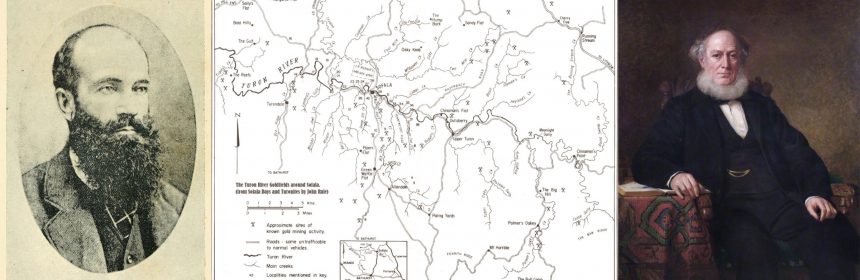
Nehemiah Bartley (pictured above left) was the brother-in-law of Edmund Barton, the first Australian Prime Minister. He travelled widely across Australia and in August 1851 went to the Turon goldfields in New South Wales. There he met “Marshall … and his West Indian friend, Davson.”

Some biographers have claimed that this was Charles Henry Marshall and that his efforts on the goldfields yielded the capital that allowed him to prosper at Glengallan where Bartley definitely did meet him and Charlotte in July 1858.

The link between the two meetings seems to have been made because Charles’s brother, William, was a cashier at the Bank of England, and the Marshall at Turon claimed to be the son of the Chief Cashier of the Bank of England.

The Chief Cashier of the Bank of England at the time was indeed a Marshall; Matthew Marshall (pictured above right). He was not related to Charles and William. So, did Bartley meet Charles? Or did he meet someone else?

It took some digging by Megan, but the true story is HERE

©Alun Stevens 2018

More on William Henry Drake

Here is the next instalment in my updates to the information on William Henry Drake and his family.

My last blog provided links to a short summary of his life and information on his early life including his posting to the Swan River Colony (Perth, Western Australia).

The Drakes were transferred from Perth to Hobart, Tasmania, where they stayed for two years. Henry was then posted to St John, New Brunswick, Canada, but had the opportunity to spend some time in England on the way which allowed his family to meet his parents.

He was also not in Canada for long and was transferred back to London, but did not spend any time there as the Crimean War began while he was in transit and he was rerouted.

He travelled to the Crimea via Greece (Piræus) and Bulgaria (Varna). He met a number of historic figures along the way and even banqueted at the Acropolis.

The updates can be found here:

Hobart

London and New Brunswick

Crimea

I have also added some navigation links so that you can move backwards and forwards through the various articles.


©Megan Stevens 2018

Another Glengallan painting

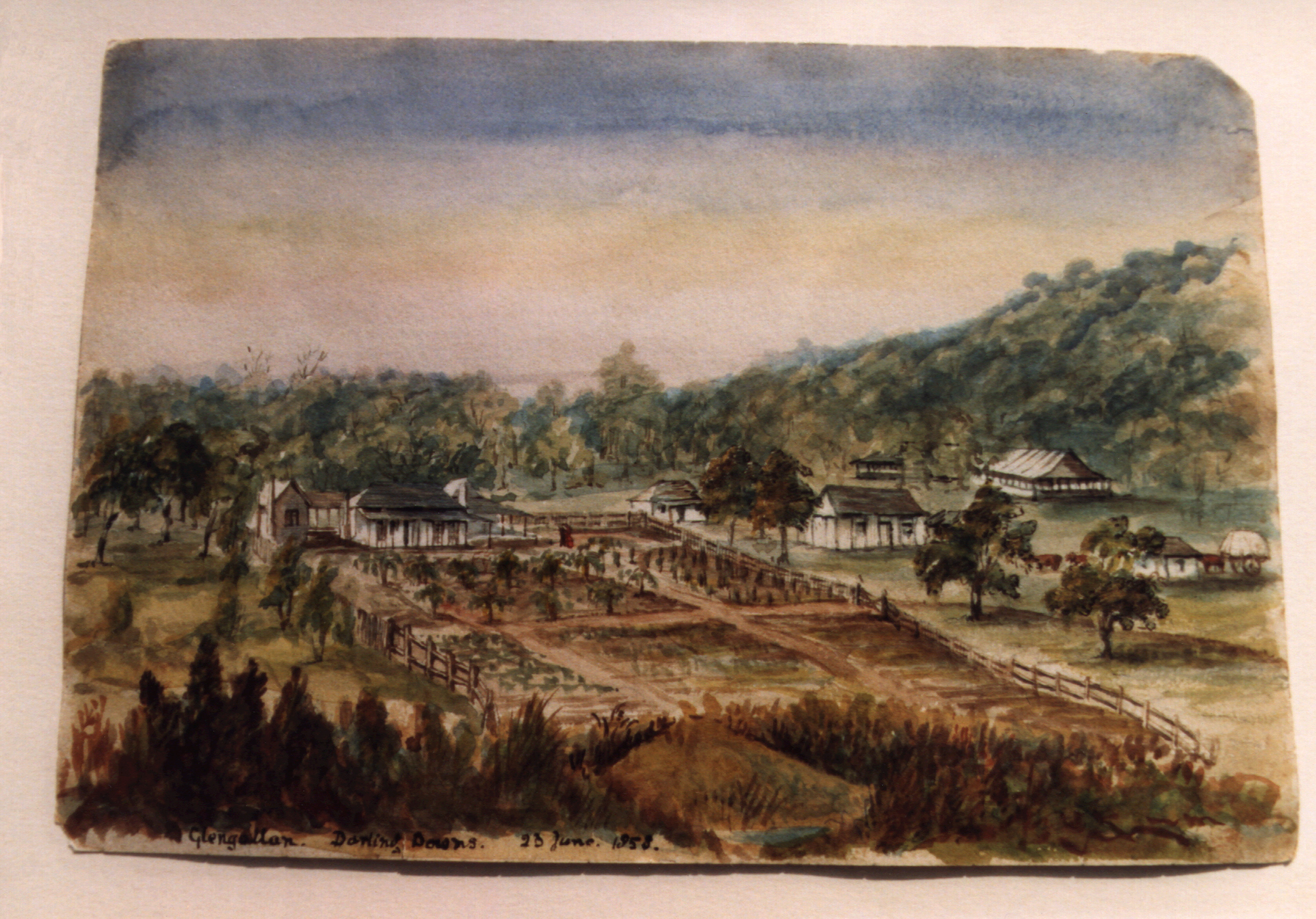
Since posting the Conrad Martens sketches and Henry Grant Lloyd watercolours, we have received permission to publish another painting of Glengallan from the mid 19th century.

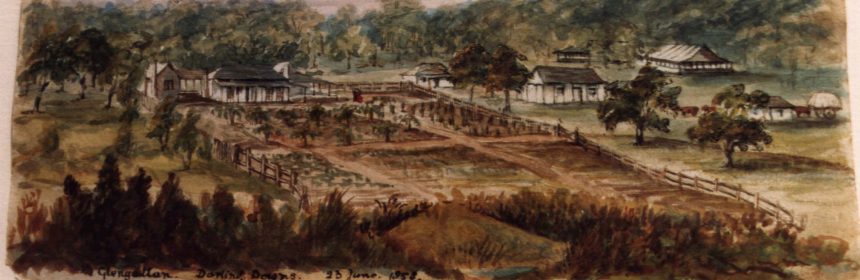
This painting, titled Glengallan. Darling Downs. 23 June 1858, was painted by Charlotte Augusta Dring Marshall and presents a slightly elevated view of the farmstead in quite vivid colours.

The painting is owned by a family member in New Zealand who is happy for the painting to be published here. Please check copyright conditions.

The painting has been included with the Martens and Lloyd pictures and can be seen HERE.


©Alun Stevens 2018

« Older Entries