Tag Archives: Glengallan /

2024 Glengallan Deuchar Dinner

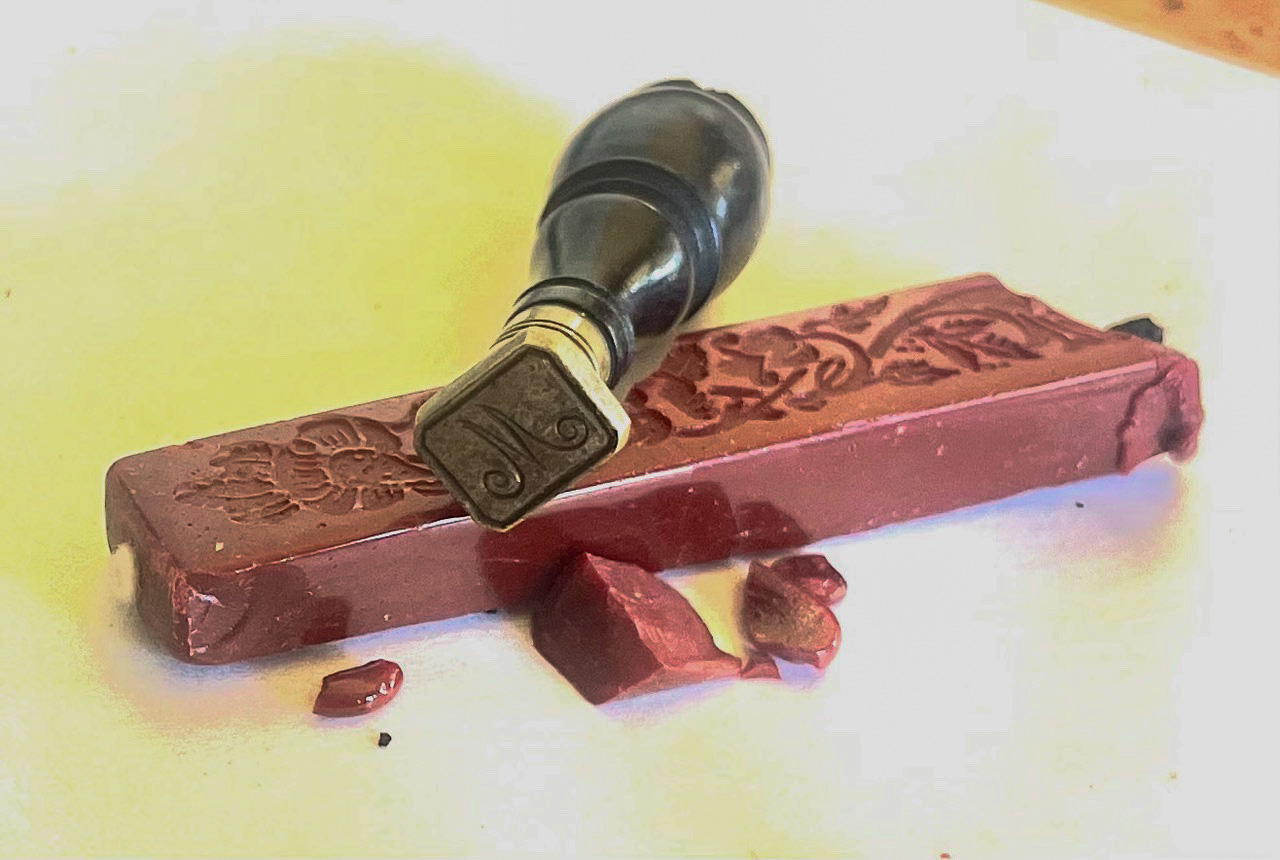
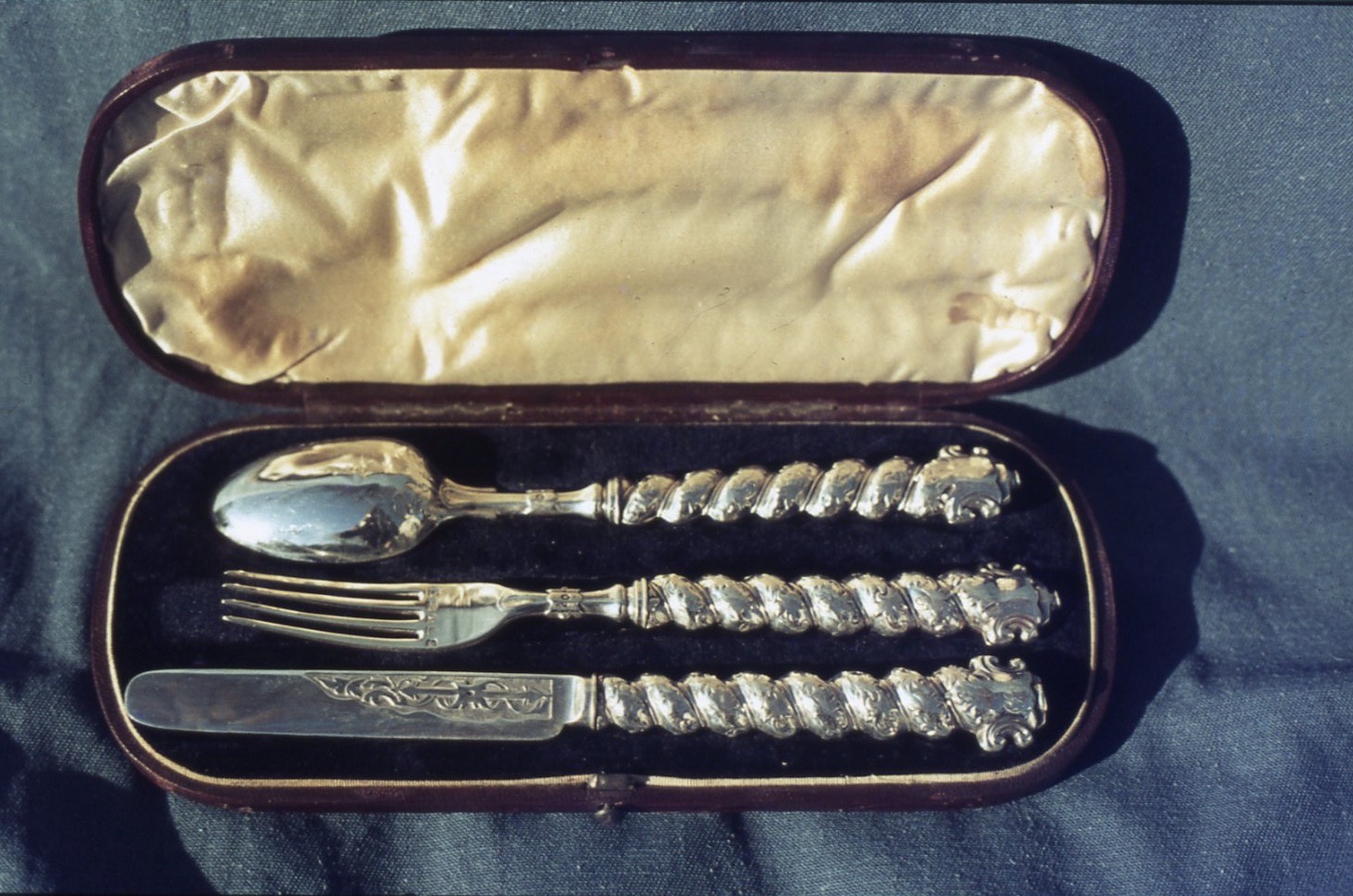
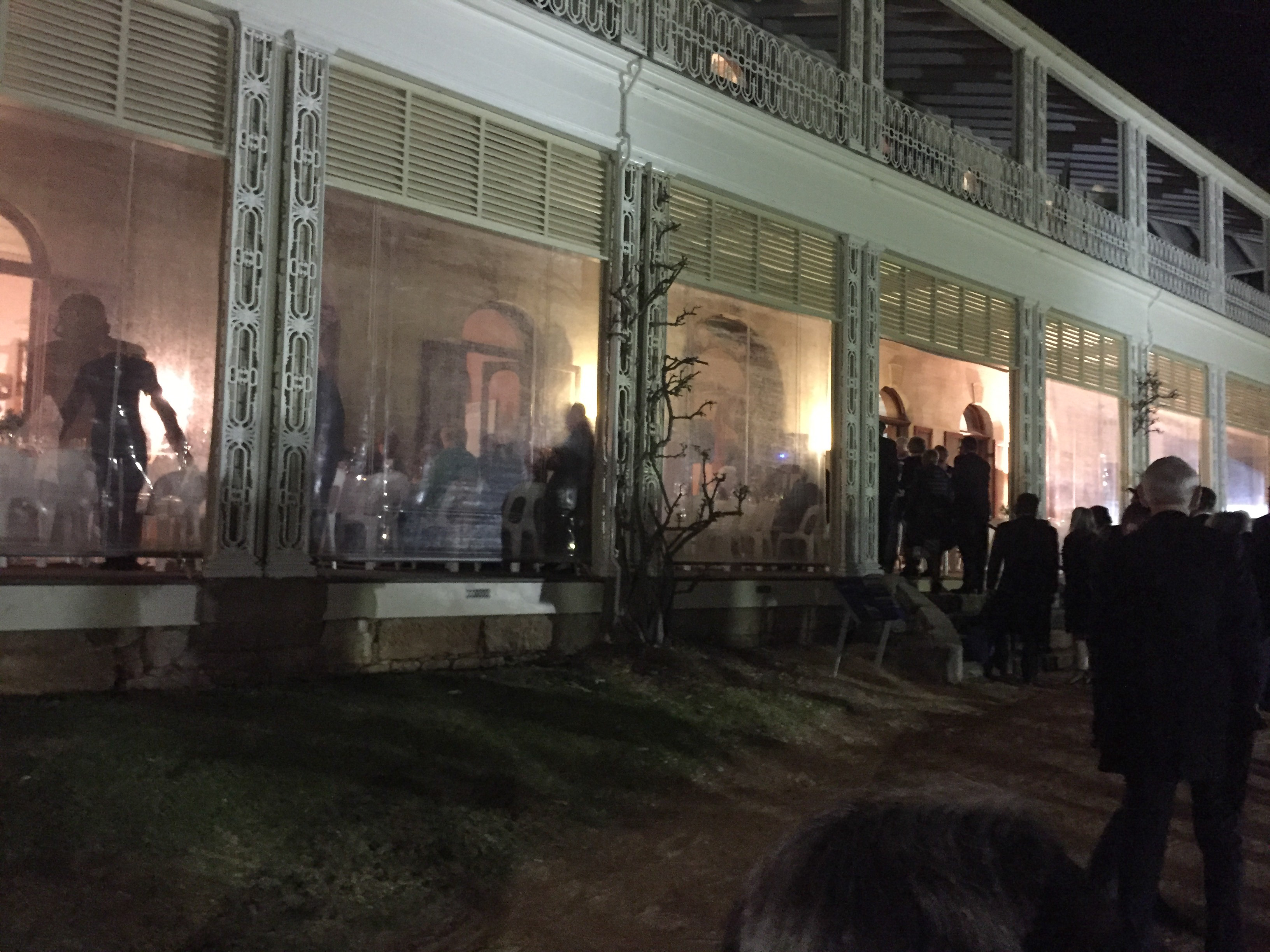
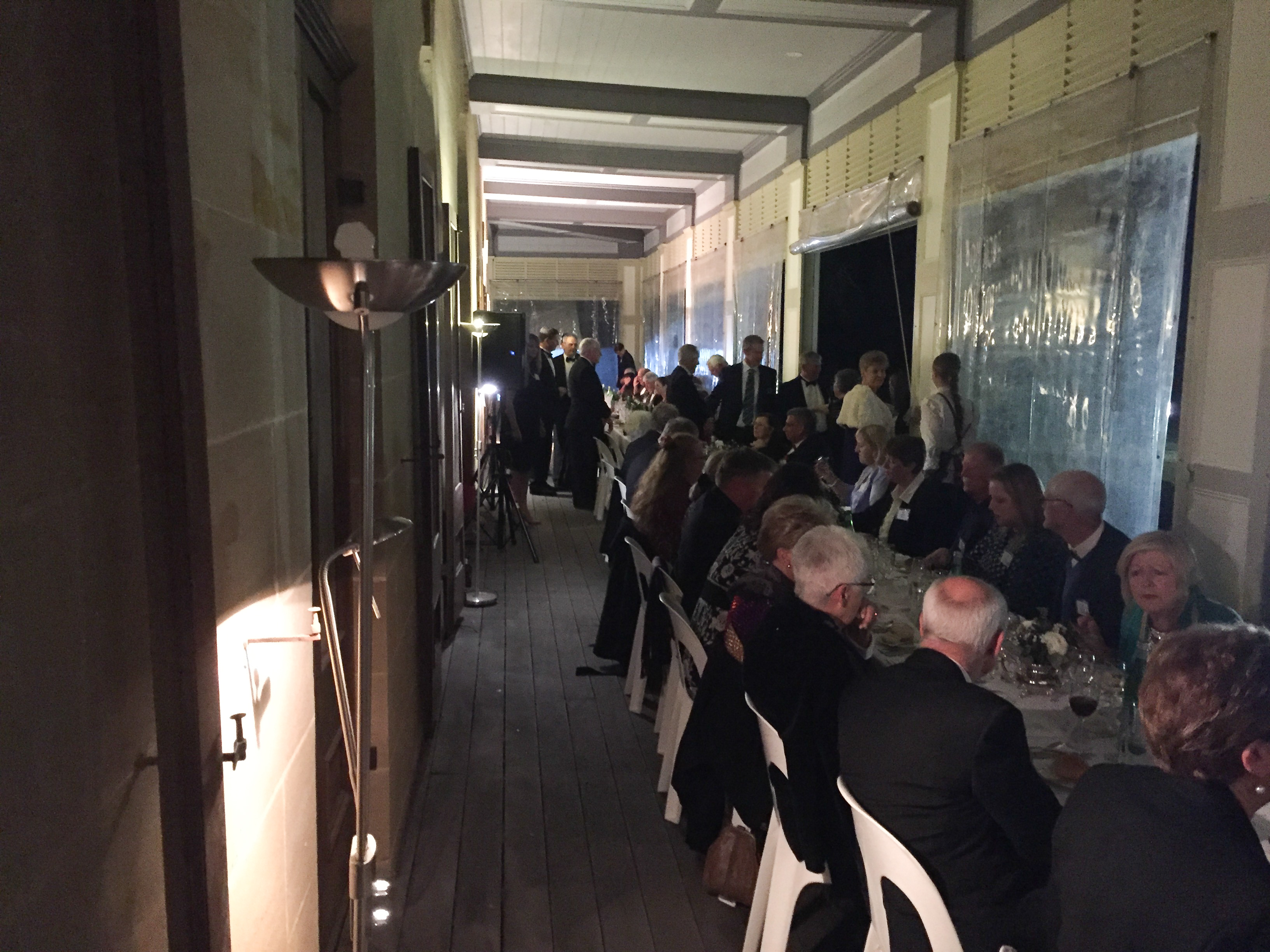
Guests at the dinner; Jane modelling the veil with Megan and Alun looking on (©Christine van Zyl); Veil, Christening Set and Seal; Megan and Alun displaying the veil.

Megan and Alun attended the annual Deuchar Dinner at the Glengallan Homestead on Saturday 14 September 2024. The homestead was built by John Deuchar and the dinner commemorates the lavish dinner he held there on 16 September 1868 to celebrate its construction. The Warwick Examiner reported:

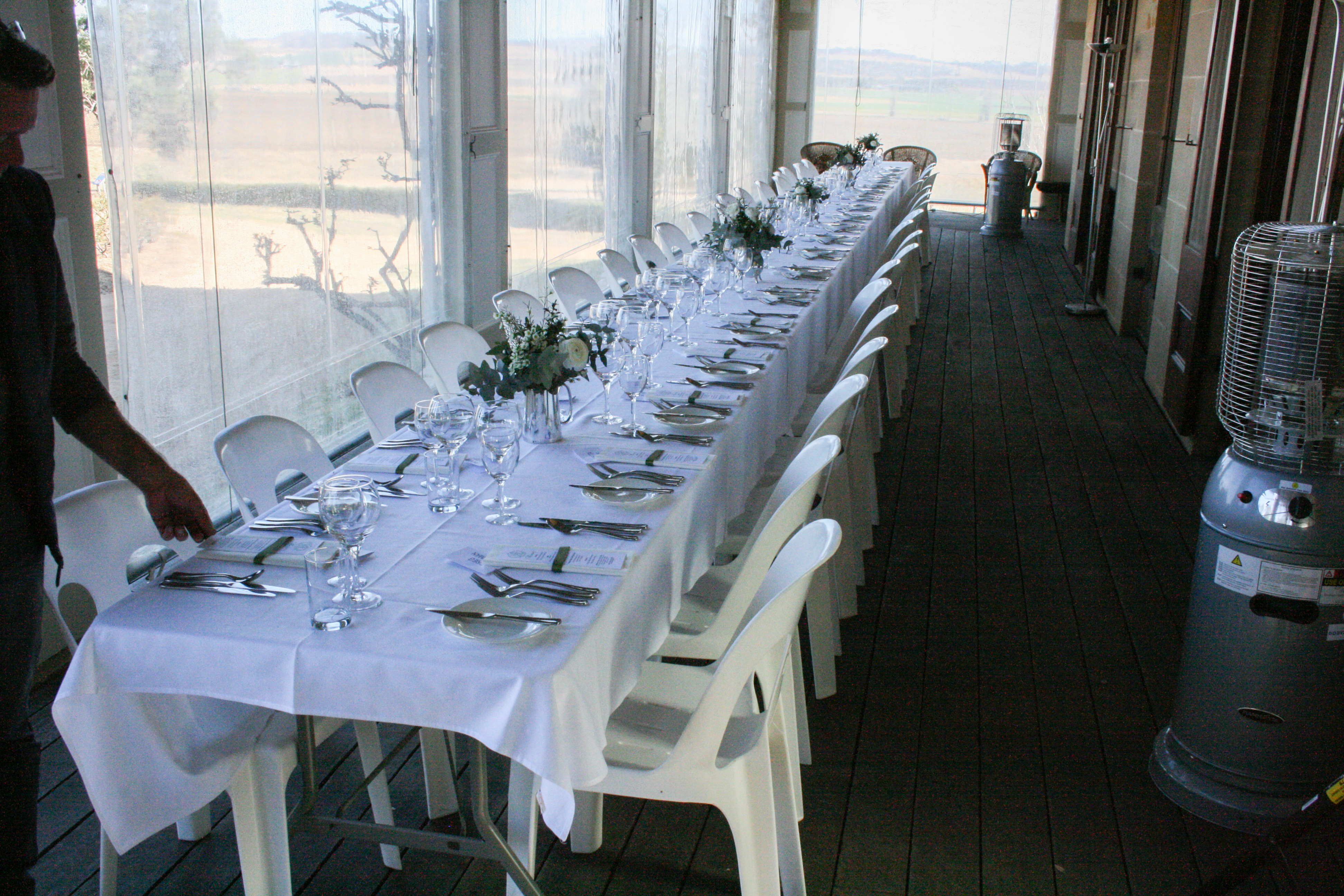
BALL AT GLENGALLAN. — On Wednesday evening last, John Deuchar, Esq., entertained a large party on the occasion of opening his new house, which is generally acknowledged to be the finest and best finished residence in the colony. A great number of his friends, including the “elite” of the surrounding districts and Brisbane, were invited. Dancing commenced at nine o’clock, and was kept up with great spirit until twelve o’clock, when the party adjourned to supper laid in the spacious balcony, which was rendered perfectly warm and comfortable by being enclosed with Venitian blinds. The supper table, which was 100 feet in length, presented a most imposing appearance, and everything connected with it was managed in the well known hospitable manner of the worthy host and hostess. … Dancing was then resumed, and kept up without cessation until six o’clock, when the numerous guests took their departure, having spent an exceedingly pleasant evening.

Glengallan homestead ready for the party.
©Glengallan 2024

The homestead was similarly prepared this time, but with heavyweight plastic blinds and gas heaters to manage the chill Darling Downs air. The modern contingent also didn’t have the stamina of the settlers of old. Matters were concluded before midnight, but we too spent “an exceedingly pleasant evening” with everything connected with it being well and hospitably managed by the dedicated volunteers and staff of the Glengallan Homestead Trust.

Apart from having a very nice dinner, the purpose of our visit was for Megan to donate some Marshall family photographs and heirlooms to the Trust to enhance their collection. The artefacts will also allow more to be told about the Marshalls, who owned the property for the longest, but were not directly involved in the running of the station after Charles Marshall’s death in 1874. Rather than just handing over the items with a handshake we prepared a narrative to explain their provenance and significance.


Megan is the great-great-granddaughter of the Marshalls of Glengallan and inherited a number of items which she would now like to re-unite with the Glengallan story. We would like to provide a short narrative to give context to these items so I am going to provide a quick background to the items and Megan is going to show them off and hand them over to Donna Fraser.

Charles Henry Marshall

The story of the Marshalls at Glengallan starts with Charles Henry Marshall.

He came to Australia in 1843 as the bookkeeper for the Van Diemen’s Land Company at Stanley on the north coast of Tasmania. He went on to become the Superintendent of their Woolnorth sheep station (the NW tip of Tasmania) and made quite a bit of money with his side hustle of growing potatoes.

He left in 1849 and by 1850 was on Glengallan in partnership with Robert Campbell tertius. In 1852 he became the sole lessee. In 1854 he went into partnership with John Deuchar – who would later build this house.

To add to the collection we have a framed photograph of Charles Marshall and the Marshall letter seal.

©Alun Stevens 2024 ©Glengallan 2024

Quite small with an M in the same style as is seen on the Marshall silver which is on display in the visitor centre.

Charlotte Augusta Dring (Drake) Marshall

Charles returned to England in 1857.

On 6 April, he had dinner with William and Mary Marshall, at 19 Regents Park Terrace – an elegant, four storey, terraced house in a very nice part of London. Both William and Mary were his cousins. William on his father’s side, Mary on his mother’s. Also at the dinner were the Drakes from No. 21.

William Henry Drake and his wife Louisa Purkis had met and married in Perth as two of the earliest settlers in WA. Their second daughter, Charlotte Augusta Dring, was born at Albany. William Henry was a Commissary and went on to be the Colonial Treasurer of WA. After Perth, he was posted to Tasmania, Canada and to Balaklava in Crimea during the War. After the War, the family settled back together at No. 21 Regents Park Terrace.

William Henry kept a detailed Journal which is how we know Charles had dinner with them. It also shows that the Drakes then saw rather a lot of Charles. He was clearly an avid suitor.

11 April: He had dinner with them.
13 April: He called on them.
18 April: He went to see an exhibition with the Drakes.
27 April: He went to see an exhibition of Crimean relics with the Drakes.
8 May: He dined with the Drakes.
12 May: He had tea at the Drakes.
 
There is then a little gap in recorded sightings of Charles but he must have been around given developments.
 
29 July: Charles again dined with the Drakes.
4 August: John Deuchar had also been doing things other than farming, but closer to home. He married Eliza Lee in Sydney. But Charles wasn’t far behind.
8 August: Charles went with Charlotte and her mother to an Art Union exhibition.
15 August: Charles went with Charlotte and her parents to the Tower of London and dinner.
18 August: Charlotte’s sister, Louisa, writes to her to congratulate her and wish her every happiness. What had happened?
26 August to 5 September: Charlotte, her parents and Charles went to Devon to visit various members of Charles’s family.
6 September: Charles, Charlotte and William Henry went to see Charles’s brother William in Clapham, London.
11 September: Wedding invitations were sent out.
23 September: Charles and Charlotte married at St. Pancras. This was also the wedding anniversary of Charlotte’s parents and of the Marshalls of No. 19.

Which brings us to the second item to come back to Glengallan.

Queen Victoria at her wedding in 1840 had set the trend for white wedding dresses and veils. Her choice of a lace veil from Honiton in Devon made them the most desirable of accoutrements and Charlotte thought so too.

We don’t know whether she bought it while they were travelling in Devon or at an outlet in London, but this is her Honiton lace veil which Megan is now donating to Glengallan for their collection. (See banner above.)

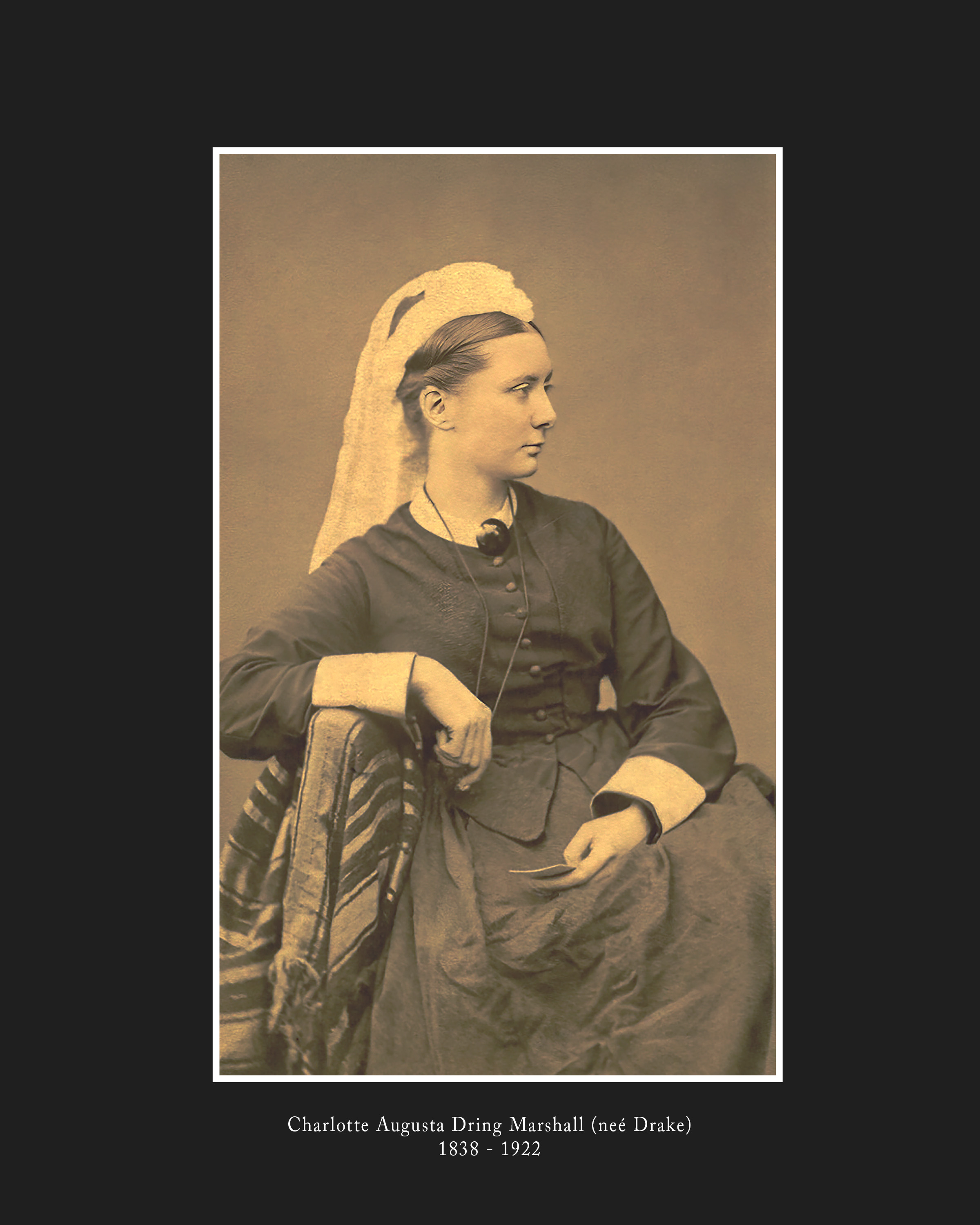
We also have two photos of Charlotte Augusta.
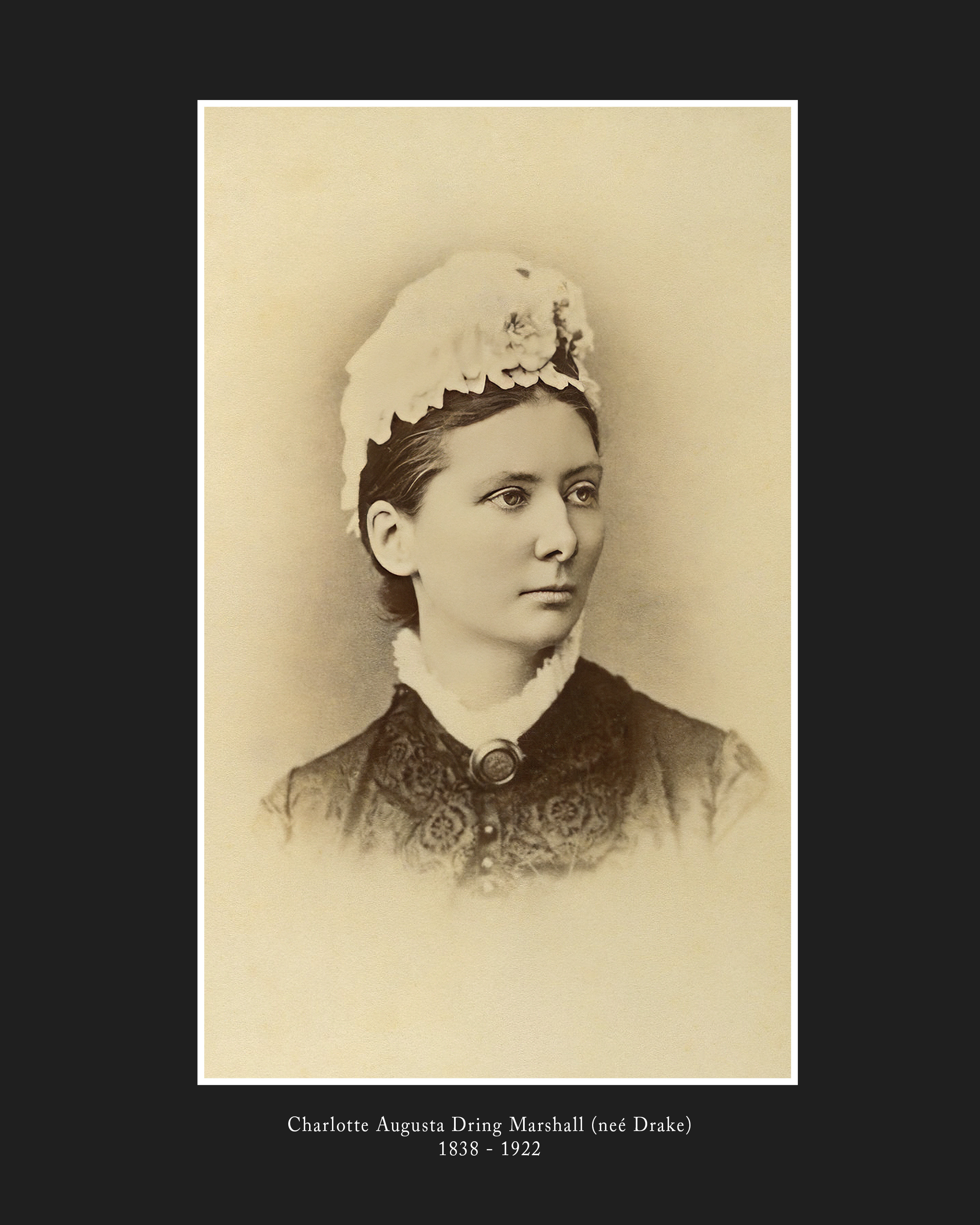
©Alun Stevens 2024 ©Alun Stevens 2024

Charlotte Louisa Marshall

After their marriage Charles and Charlotte honeymooned in Scotland and departed for Australia on 12 December 1857. They arrived at Sydney on 17 February 1858, at Brisbane on 4 March and at Glengallan a few days later.

So Charles had been away for over a year.

Life settled down and their first child, a daughter, Charlotte Louisa, was born in the old wooden house on 23 February 1859.

She was the first of the Glengallan Children. Mary Deuchar had been born on 4 June 1858, but this had been at her grandmother’s house in Double Bay, Sydney.

Charlotte Louisa was not only born on Glengallan, she was also baptised on Glengallan, on 17 April 1859, by Rev William Woodman Dove. Rev Benjamin Glennie’s diary shows that there were 15 people in attendance.

And she was presented with this silver Christening set which is also being donated to Glengallan.

It is Sterling Silver engraved CLM and hallmarked for Sheffield 1855.

There is also a photo of Charlotte Louisa (called Louie) as a girl.
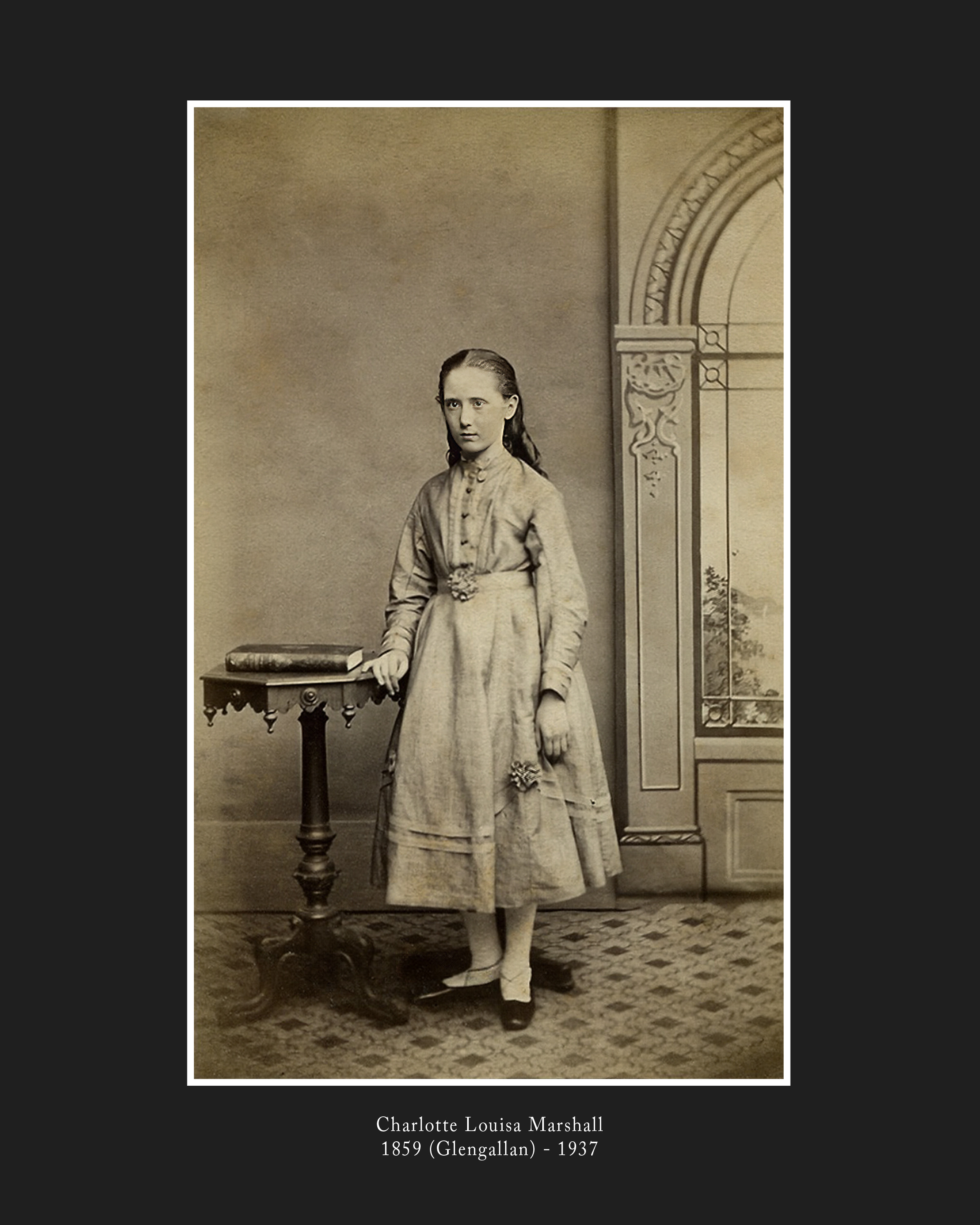
©Alun Stevens 2024 ©Alun Stevens 2024

Those are all the items, but, if you will indulge me for a few more minutes, there is one more story to tie them all together. We need to jump forward 25 years. John Deuchar and Charles Marshall have died. Charlotte Augusta’s mother has also died in Grahamstown, South Africa and her father has married a local young lady three years younger than Charlotte Augusta. Charlotte is now the partner in Marshall and Slade dealing with William Ball Slade.

On 2 November 1883 Charlotte Augusta wrote to William Ball Slade:

Did I tell you that Louie is engaged to be married, (she has been engaged for some months but it is not given out yet) to Horace Ayliff, he is a nephew of my Step Mother Lady Drake, & is going to be a Barrister, but is not called yet – His Father is the leading Solicitor in Graham’s Town so will be able to put work into Horace’s hands – I shall not like Louie’s leaving to go to South Africa to live, but of course if it is for her happiness I shall have to let her go – & she thinks the hot Climate will suit her better than the cold & damp of England – However I do not see much chance of their being married at present as he must make a position first.

On 13 June 1884, she wrote:

Do not be surprised if you have a visit before very long from my eldest daughter, she is most anxious to accept an invitation she has had from the Arnolds in Sydney, & had just planned to accompany Dr. & Mrs. Taylor, but not it is decided that Mrs. Taylor does not go out yet so Louie is looking for another Chaperone – If she does go, she wishes much to have a peep at Glengallan, where she was born.

On 27 February 1885 she wrote again:

I am getting Louie’s things ready as I believe she will go to the Cape to be married this Spring.

She had wanted to see Glengallan again, but didn’t make it. She was married in Cape Town on 23 May 1885 and the wedding veil you have just seen was one of the “things” that her mother got ready for her. So we can be confident that the girl from Glengallan also wore it at her wedding.

Thank you all and especially Jane Brenner for modelling the veil.


©Alun Stevens 2024
Glengallan Orchard being re-created

The following post has just been made to the Glengallan Homestead Facebook page. It will be lovely to see an orchard again similar to what was laid out in the 1850’s.

It will undoubtedly take some years before we see the fruits of their labour, but we look forward to the result.

NewsMail also published a story about the orchard on 4 September 2018 which can be found HERE

Another Glengallan Picture

The Australian Town and Country Journal printed an article on Glengallan on 19 June 1875. The article was accompanied by an engraving showing the homestead and the then new wool shed.

Someone clipped the engraving out of the Journal and carefully coloured it with what appears to be water colours to produce a very attractive view of the property.

The article provides a good description of the property and its workings so I have kept them together. Interesting reading. Good descriptions of the layout of the wool shed and the facilities for the cattle stud.

The painting has been included with the Martens, Lloyd and Marshall pictures and can be seen HERE.

The pictures are in chronological order so this one is at the bottom.


©Alun Stevens 2018

Another Glengallan painting

Since posting the Conrad Martens sketches and Henry Grant Lloyd watercolours, we have received permission to publish another painting of Glengallan from the mid 19th century.

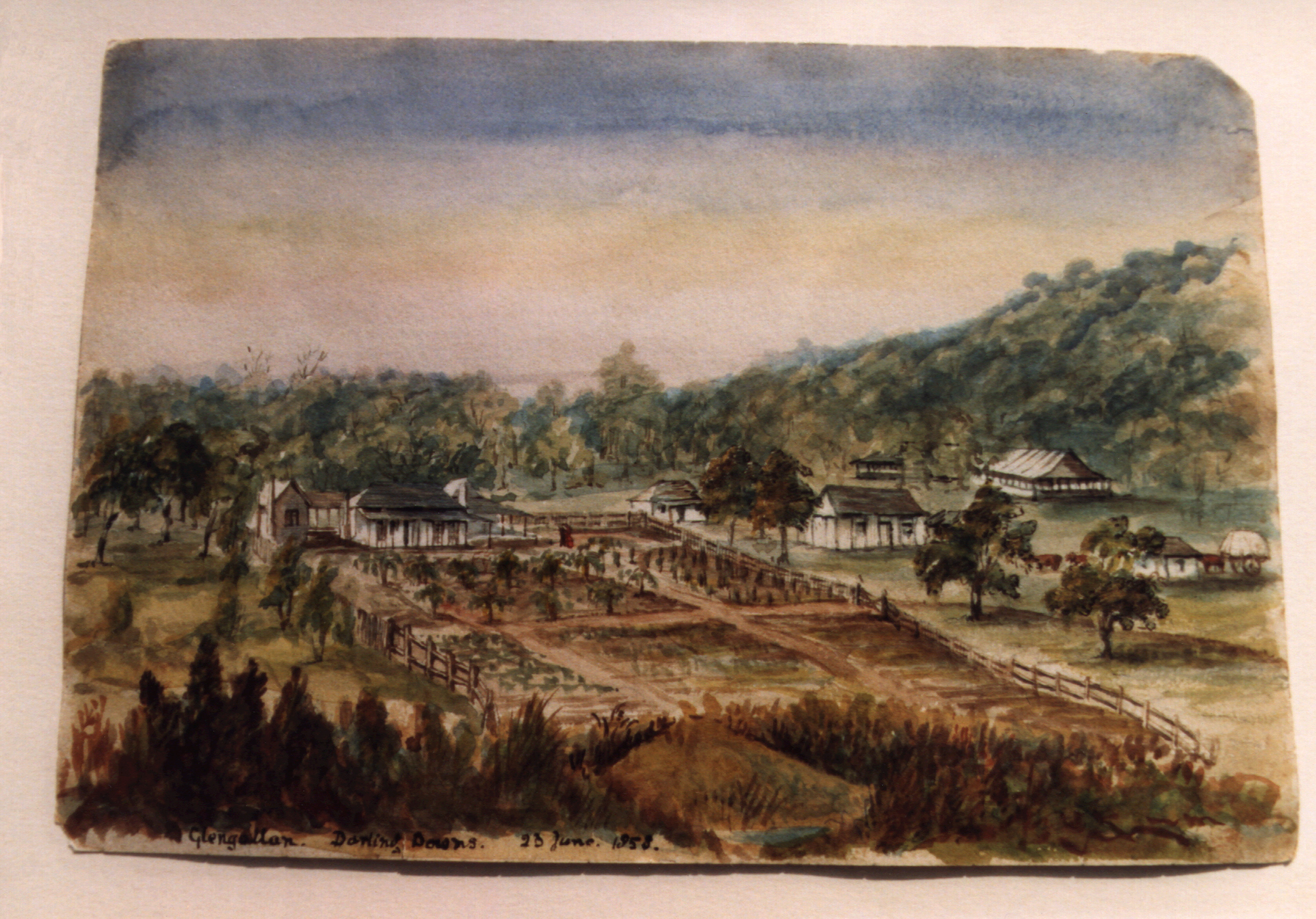
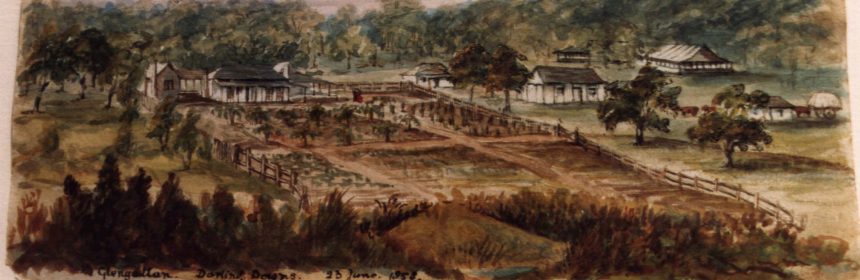
This painting, titled Glengallan. Darling Downs. 23 June 1858, was painted by Charlotte Augusta Dring Marshall and presents a slightly elevated view of the farmstead in quite vivid colours.

The painting is owned by a family member in New Zealand who is happy for the painting to be published here. Please check copyright conditions.

The painting has been included with the Martens and Lloyd pictures and can be seen HERE.


©Alun Stevens 2018

Old Glengallan in pictures

Megan and I visited the State Library of NSW in December 2017 to photograph manuscripts related to the Drake and Marshall stories. Included amongst these documents were a number of sketches by the renowned 19th century artist Conrad Martens and a number of watercolour paintings by Henry Grant Lloyd all depicting Glengallan Station and aspects of the Darling Downs.

Banner image courtesy of the State Library of New South Wales [Call No. PXC 972 Item f.11]

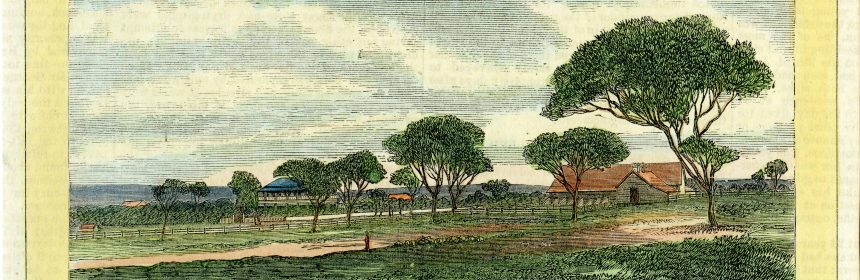
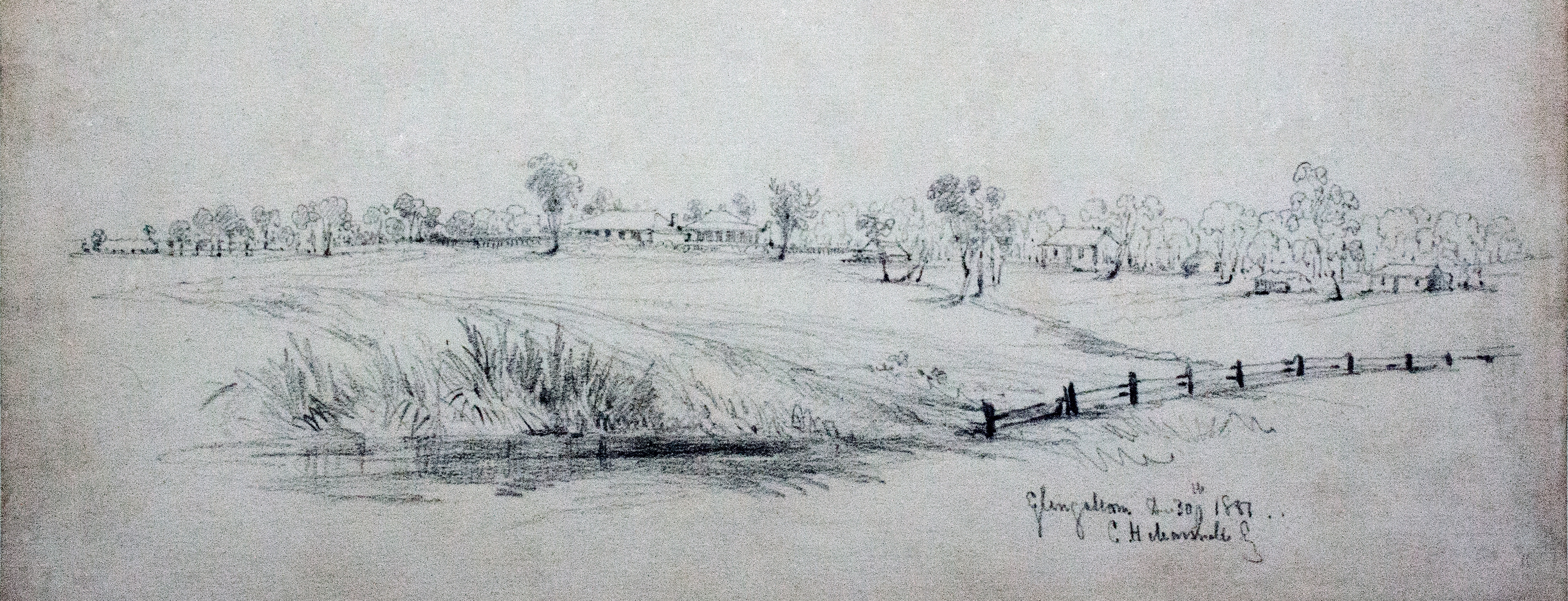
The banner image is a section of a sketch by Conrad Martens entitled Glengallan Dec 30th 1851 C H Marshall Esq. The view is from the creek looking towards the north-west and is one of a number he sketched around this time.

The sketch shows the homestead and farm buildings as they were at the time that Charles Marshall and Robert Campbell tertius took control of the station.

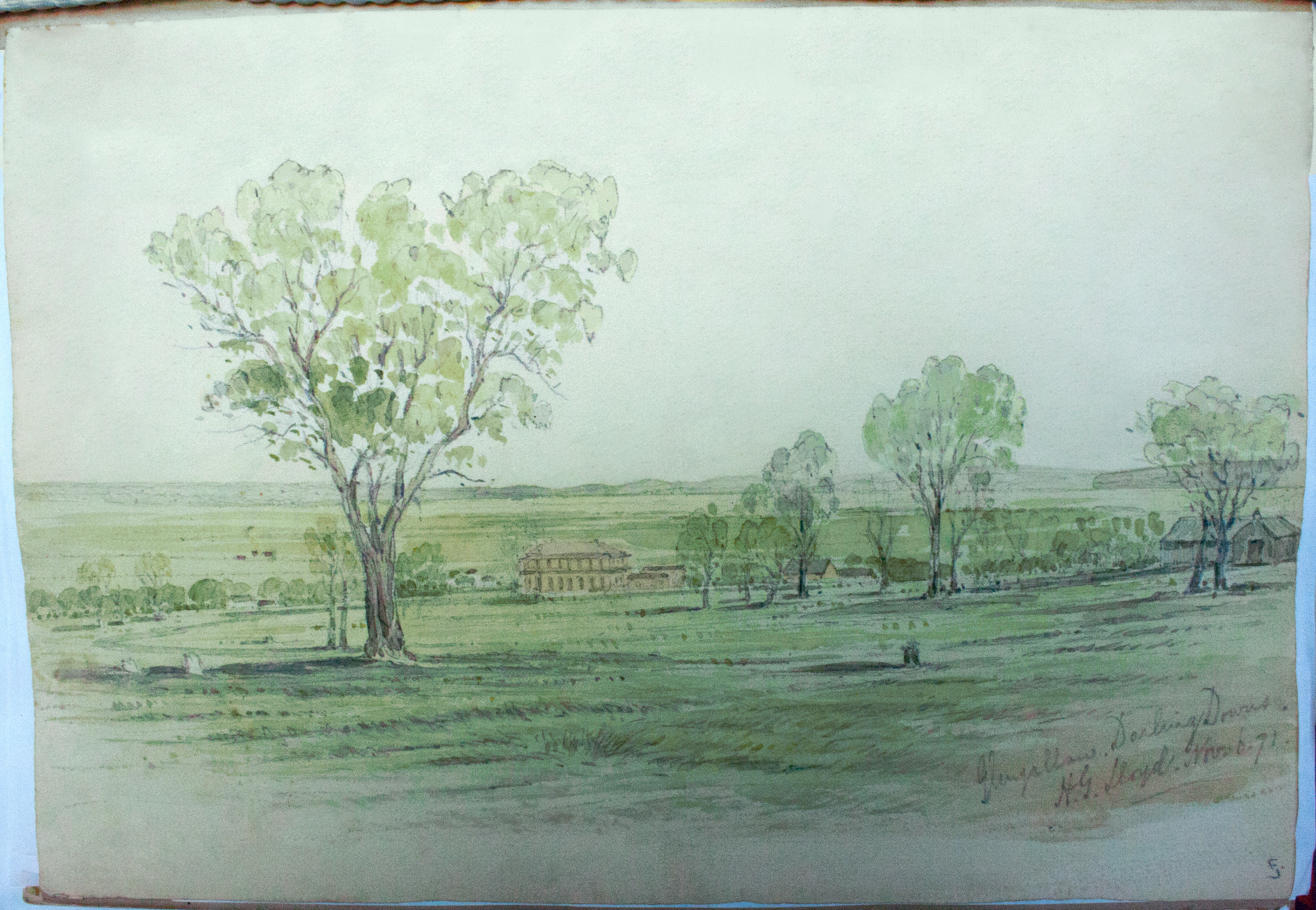
18711106 Glengallan Darling Downs PX_D28 f.47b Glengallan Darling Downs, HG Lloyd, Nov 6, 71
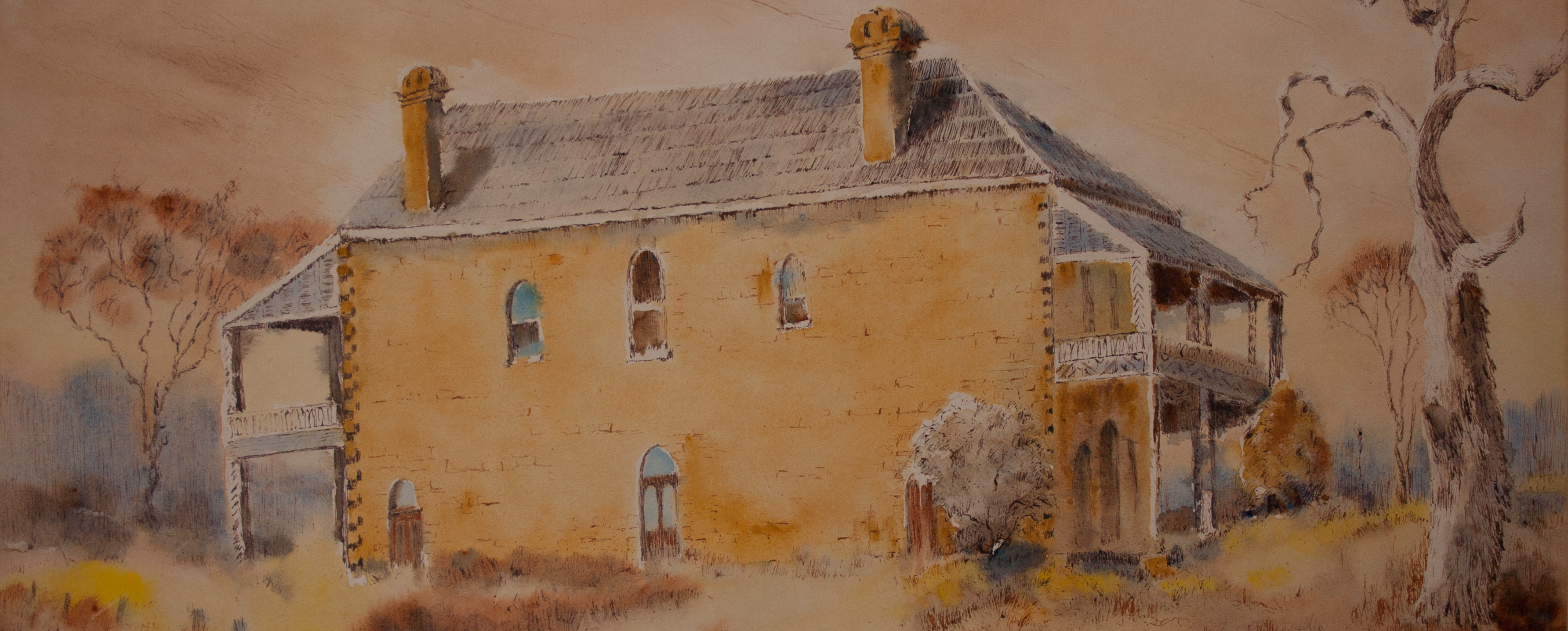
Courtesy State Library of NSW: PX*D 28 f.47

The paintings by Henry Grant Lloyd were painted in November 1871, almost exactly twenty years after Conrad Martens completed his sketches. This painting shows the farmstead as it was around the time of the formation of the Marshall and Slade partnership. It shows the current homestead, built by John Deuchar in the late 1860’s.

All of the documents have suffered to some extent from age. All show the effect of foxing and staining to a greater or lesser extent. The paintings also show the effect of the fading of certain pigments which has caused the images to both become less distinct and to change colour.

I have spent some time with Photoshop® trying to reverse or hide these effects. I can’t claim that the images are now as they would have been when drawn or painted because I have no benchmark for the adjustments I made. But they are now closer to what they would have been like and provide an interesting perspective on Glengallan and the surrounding area in the early 1850’s and early 1870’s.

The full set of images can be seen HERE.

Please also read our copyright statement with respect to the images.


©Alun Stevens 2018

Who were the Marshalls of Glengallan?

A dinner party was held in the Glengallan homestead on 16 September 2017 to celebrate the homestead’s 150th anniversary. Megan was invited to speak on behalf of the Marshall descendants and present an overview of the family. This is a transcript of her speech.


Left BalconyThank you for asking me to speak about my great-great-grandparents, Charles and Charlotte Marshall. It is good to be here, near where the “old house” stood, where my great-grandmother was born in 1859.
Charles and Charlotte were children of the expansion of the British Empire, with close ties to Totnes in Devon.

Charles was born in 1818 at Mauritius, where his father, William, was joint chief of police. William was born in Devon in 1780, and had gone to sea, aged 14, with the East India Company. When he married Louisa Bentall at Totnes in 1810, he joined the Army, and was posted to the Cape of Good Hope, and then Mauritius.

After a failed venture, William returned to England, alone, in 1822, but the family’s fortunes worsened the following March, when Louisa died at Mauritius, aged 39, probably during the cholera pandemic. The children re-joined their father in Scotland a year later.

Guests ArrivingFour years later, William died suddenly, and the Devon families rallied to care for the orphans. His probate poignantly recorded the children’s election of their uncle, John Bentall, as guardian of their inheritance, which secured their futures.
Charles was a mariner at Totnes by 1841, though details are scant. The only mention I have is of Charles working as third mate on board the Princess Charlotte in 1839.

He became bookkeeper for the Van Diemen’s Land (VDL) Company at Stanley in 1843, a position obtained through his father’s cousin, Edward Marshall of the War Office, a director of that Company. The Tenantry Return for that year uniquely described Charles as “a relation of … Edward Marshall” and as having “capital”.

The VDL Company archive in Hobart is vast. Documents show that in 1846 Charles was appointed Superintendent of Woolnorth at Cape Grim, running the sheep station. He resigned in 1849, with sufficient funds to try his luck in Queensland. By 1851 he was on Glengallan, becoming sole proprietor in July 1852.

Charlotte was born at Albany, Western Australia, in 1838. Her father, William Henry Drake, like his father, lived the peripatetic life of a Commissary. Henry was born in Portugal, where his father served during the Peninsular War. In 1831, Henry was sent to Perth, and there married Louisa Purkis.

He was transferred to Hobart in 1848, and two years later, to Canada, after which he was sent to London. On his arrival there in 1854, he was diverted to the Crimea for the duration of the war. He was stationed at Balaklava, where his wife and eldest daughter joined him. Charlotte and her sister, Laura, stayed with their grandparents in London, attending school.

When hostilities ceased in 1856, the Drakes were re-united in London. Henry’s second cousins, William and Mary Marshall, also from Totnes, were neighbours. Mary (born Benthall) was Charles Marshall’s first cousin, and William, a distant cousin of his.

So, fate ensured that Charles and Charlotte would meet when Charles visited England after going into partnership with John Deuchar. Henry’s Journal tells the story. In August 1856, Edward Marshall of the War Office called. Numerous visits with William and Mary Marshall followed, and, significantly, on the 6th of April 1857, the Drakes dined with them. Henry noted that “Mr. C. Marshall” was present. In May, Charles dined with the Drakes a few times, and had tea with them. In August, Henry, Louisa, Charlotte, and Charles went to an Art Exhibition, and visited the Tower of London.

On the 18th  of August, Charlotte’s older sister, Louisa Maria, congratulated her on her engagement, saying, “You know I always said it would give me more pleasure to see you married than anything else … and … I do rejoice to think you will have a husband I like so much & everybody else thinks so highly of.”

Invitations for the Wedding Breakfast went out on the 11th of September, and on the 23rd, Charles and Charlotte were married at St Pancras Parish Chapel, in Camden, by Charles’s second cousin, the Rev. Stephen Hawtrey. Charlotte wore a hand-embroidered Honiton lace veil – the same one my mother wore when she married my father. Henry wrote that “A Party of 37 lunched with us … & at 3 p.m. the Bride & Bridegroom left for Rugby & a tour.”

Charlotte noted in her Journal that they “Left 21 Regents Park Terrace in style, having had an old white satin shoe thrown at us.” The couple explored the Lake District, Edinburgh, and York, and returned to London at the end of October. Henry wrote on the 12th of December that “Charles & Charlotte left Southampton … for Alexandria en route for Australia.” They arrived at Sydney on the 17th of February 1858.

And, so, on the 23rd of February 1859 my great-grandmother, Charlotte Louisa Marshall, was born, here, not long after her mother painted the beautiful watercolour featuring their wooden house, with Mount Marshall in the background. Thirty years later Charlotte told Slade that she was glad she “was not there to see the old house pulled down”.

The Marshalls had six children. Charles Henry, the youngest, was born in 1874, four months after his father’s sudden death. Officially, Charles senior died of “cardiac disease”, but I suspect he died from melanoma. Sir James Paget, London’s leading surgeon, performed what Charles called “a most severe operation” on a “malignant” tumour on his ear in mid-1873. Paget performed another operation in March 1874, when the tumour spread.

My mother told me that Charlotte discovered that Charles had had another family after he died. This family was not mentioned in his will, but we know there was a lost “side letter”, in which it seems he left a bequest. Charlotte wrote to Slade, cryptically saying that following her “dear husband’s death” she had had “very many other very heavy expenses to meet that no one knows of or suspects”.

I have searched high and low for this family, but only recently found the VDL Company Tenantry Report for August 1849, which showed Charles had an unnamed “wife” and “child”. It clearly wasn’t a formalised relationship. Charles did not abandon his secret family, as otherwise I would not have heard about them.

After Charles died, Charlotte had to take care of her investment. Her typically feminine Victorian education had not prepared her for this, but she worked hard to understand and to contribute intelligently.

She remarried in 1883, to the accomplished William Knighton. They signed a pre-marital deed, described by Charlotte to Slade as follows: “I have had a special clause put in … that the management of Glengallan should be carried on by you & by me as heretofore, no one else in England knows as much about it as I do, & I still feel quite capable of doing my part & you will find all just as before.” This prevented Knighton from interfering, though he did help when she was ill, or when family crises intervened. I know Slade didn’t find the Knightons easy to deal with, and vice versa, but relations were always respectful.

Knighton died in 1900, and in 1905 Marshall & Slade was dissolved, after the Government’s repurchase of Glengallan for closer settlement. Charlotte died of old age in 1922 at her home, Caberfeigh, in Redhill, Surrey. She was a remarkable woman: she was raised to be a traditional Victorian wife and mother, but became a successful Victorian capitalist.

Balcony in SwingThe Marshalls’ substantial investment in Glengallan wouldn’t have been as lucrative as it was without the exceptional skill, hard work, and intelligence of both Deuchar and Slade. As the Brisbane Courier noted in November 1872, Charles Marshall had “taken into partnership … William B. Slade, one of the cleverest and most respected of the young gentlemen in the district”; and the Queenslander said in 1932 that “It was Mr. Deuchar who laid the foundation of the noted Shorthorn and merino studs on Glengallan.”

How different would all their lives have been if John Deuchar and Charles Marshall had been as long-lived as William Ball Slade.

Thank you.


In preparation for her speech, Megan prepared a summary of information regarding the Marshalls and their families. It proved to be too long for the dinner and had to be edited to yield this speech. The longer, more detailed summary can be found HERE.

©Megan Stevens 2018